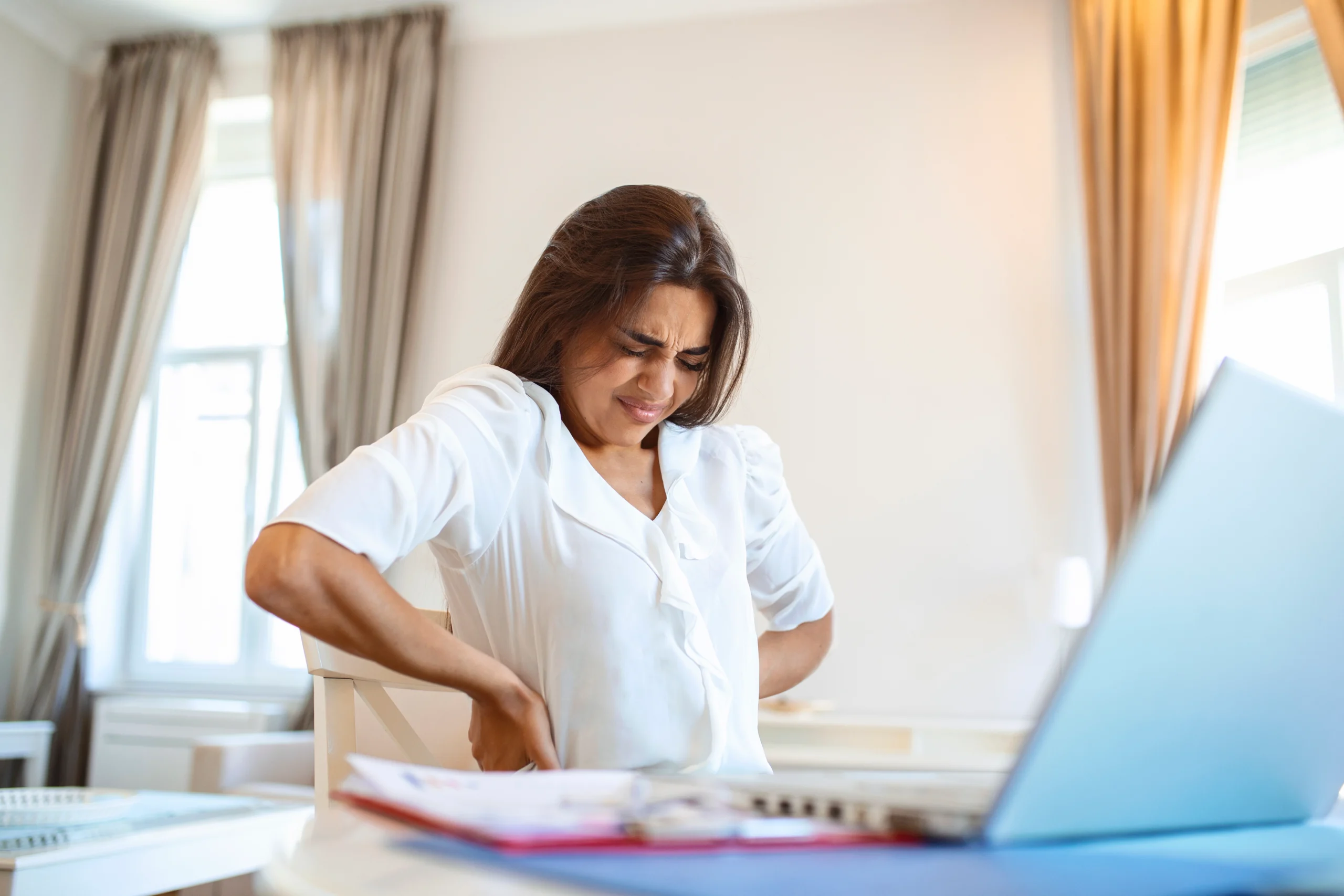
Hip pain while sitting can be frustrating, especially when it appears during long work hours, driving, watching TV, or getting up from a chair. The discomfort may feel deep inside the hip, around the buttocks, or on the outer side of the hip.
Sometimes, the problem is related to prolonged sitting or poor posture. In other cases, hip pain may be linked to bursitis, tendon problems, arthritis, nerve irritation, or an underlying injury. Identifying the cause is essential because treatment depends on what is causing the pain.
Understanding Hip Pain While Sitting
Hip pain that develops or worsens during sitting is a specific clinical pattern — and it is clinically meaningful because the sitting position places unique loads and positions on different hip structures compared to standing or walking.
Sitting — particularly for extended periods — compresses specific structures, stretches others, and alters the relationship between the femoral head and the acetabulum. For some conditions, sitting is the primary aggravating position. For others, it is the transition from sitting to standing that triggers the sharpest pain.
Understanding which specific moment hurts most — the sitting itself, prolonged sitting, or the moment of standing up — is one of the most useful diagnostic clues your orthopaedic specialist will ask about.
Why Sitting Makes Hip Pain Worse
Not all hip conditions produce pain in every position. Sitting specifically aggravates hip pain through several distinct mechanisms:
- Hip flexor compression — sitting shortens and compresses the hip flexor muscles and the anterior joint capsule
- Ischial bursa pressure — the sitting bones (ischial tuberosities) directly compress the bursa beneath them
- Piriformis tension — sitting stretches the piriformis muscle across the sciatic nerve, producing buttock and hip pain
- Increased intra-articular pressure — in hip arthritis, sitting at certain angles increases joint pressure and pain
- Reduced hip extension — prolonged sitting tightens the hip flexors, creating anterior hip pain and impingement on standing
5 Major Causes of Hip Pain While Sitting
Cause 1 — Hip Osteoarthritis
Hip osteoarthritis is one of the most common causes of deep hip joint pain while sitting — particularly in adults over 50. It occurs when the protective articular cartilage within the hip joint gradually breaks down, leading to bone-on-bone contact, inflammation, and pain.
The sitting position is frequently provocative because certain sitting angles increase compressive load on the affected joint surfaces.
Characteristic symptoms:
- Deep, aching groin or front hip pain — often described as pain inside the joint itself
- Stiffness after sitting that takes several minutes to ease on standing
- Gradual worsening over months or years — not sudden onset
- Crepitus (grinding or crunching sensation) within the hip joint
- Reduced range of hip rotation — particularly internal rotation
Why sitting aggravates it:
Sitting places the hip in flexion — a position that increases contact pressure between degenerating cartilage surfaces, particularly at the anterior joint.
Cause 2 — Ischial Bursitis (Weaver’s Bottom)
Ischial bursitis — sometimes called weaver’s bottom — is inflammation of the bursa (a fluid-filled sac) that sits between the ischial tuberosity (sitting bone) and the hamstring tendons. Prolonged or hard-surface sitting compresses this bursa directly, causing localised buttock pain.
Characteristic symptoms:
- Pain felt directly on the sitting bones — the bony prominences felt when sitting on a hard surface
- Pain that increases progressively during sitting and improves immediately on standing
- Tenderness on palpation of the ischial tuberosity
- Pain that may radiate down the back of the thigh (due to proximity to the hamstring origin)
- More common in cyclists, rowers, and people who sit for prolonged periods on hard surfaces
Why sitting aggravates it:
The ischial bursa is directly compressed by body weight on the sitting bone — making sitting the primary provocative position for this condition.
Cause 3 — Piriformis Syndrome
The piriformis is a small but crucial muscle deep in the buttock that connects the sacrum to the top of the femur and helps rotate the hip outward. When this muscle becomes tight, inflamed, or hypertrophied, it can compress the sciatic nerve as it passes nearby — producing buttock pain and sciatic symptoms that are classically aggravated by sitting.
Characteristic symptoms:
- Deep buttock pain — not groin pain — that worsens with sitting and improves with walking or standing
- Pain that may radiate down the back of the thigh and into the leg (mimicking lumbar sciatica)
- Pain triggered by crossing the legs while sitting
- Tenderness deep in the buttock on palpation
- Worsening after prolonged car journeys or desk work
Why sitting aggravates it:
Sitting stretches the piriformis muscle across the underlying sciatic nerve — increasing neural compression and buttock pain progressively through the sitting period.
Cause 4 — Hip Flexor Tendinopathy or Iliopsoas Syndrome
The iliopsoas is the primary hip flexor muscle — connecting the lumbar spine to the femur and responsible for lifting the thigh. When the iliopsoas tendon becomes inflamed or degenerated (tendinopathy), it produces anterior hip and groin pain that is typically worst when transitioning from sitting to standing.
Characteristic symptoms:
- Groin or anterior hip pain — felt at the front of the hip crease, not deep in the joint
- Pain worst at the moment of standing up from a chair — when the hip flexor transitions from shortened to loaded
- Clicking or snapping sensation at the front of the hip (coxa saltans or snapping hip syndrome) in some patients
- Worsens after prolonged sitting in deep hip flexion
- Common in younger adults, runners, and individuals who sit for long periods with hips flexed beyond 90 degrees
Why sitting aggravates it:
Prolonged sitting keeps the iliopsoas in a shortened, compressed position — which increases tendon load and pain on subsequent loading during standing.
Cause 5 — Hip Labral Tear
The acetabular labrum is a ring of cartilage that deepens the hip socket and provides a seal that helps distribute joint load. When the labrum tears — from repetitive hip impingement, acute trauma, or structural hip abnormality — it produces pain in specific sitting positions and with hip rotation.
Characteristic symptoms:
- Deep anterior hip or groin pain — sometimes described as pain inside the hip crease
- A clicking or locking sensation within the hip joint
- Pain that is worse in deep sitting positions or when rising from low seats
- Pain with prolonged sitting — particularly in low chairs where the hip is flexed beyond 90 degrees
- Common in active adults aged 20-40, particularly those with femoroacetabular impingement (FAI)
Why sitting aggravates it:
Deep hip flexion in sitting can impinge the labral tear between the femoral head and acetabulum — producing sharp or catching pain characteristic of labral pathology.
5 Tips to Relieve Hip Pain While Sitting
These evidence-based strategies provide meaningful relief for most causes of hip pain while sitting — and can be started immediately while awaiting specialist assessment.
Tip 1 — Adjust Your Sitting Position and Chair Height
The most immediate and accessible intervention. Sitting with hips at approximately 90 degrees — knees level with or slightly below the hips — reduces anterior hip impingement and iliopsoas compression.
- Use a chair with adjustable height so feet rest flat on the floor
- Avoid sitting in very low chairs or deep sofas that push the hips into excessive flexion
- Avoid crossing legs while sitting — particularly relevant for piriformis syndrome
Tip 2 — Take Frequent Movement Breaks
Prolonged static sitting is one of the most consistent aggravating factors across all causes of hip pain while sitting. Setting a timer to stand and walk for 2-3 minutes every 30-45 minutes of sitting is one of the most effective pain management strategies.
- Brief walking reduces ischial bursa compression and piriformis tension
- Movement promotes synovial fluid circulation in an arthritic hip joint
- Hip flexor muscles return to a more functional length with regular extension
Tip 3 — Apply Heat Before Sitting, Ice After
Heat before prolonged sitting sessions loosens tight hip flexors, piriformis, and joint capsule — reducing pain during the sitting period. Ice for 15 minutes after prolonged sitting or provocative activity reduces post-activity inflammation.
- Use a warm pad or heated cushion for 10-15 minutes before a long desk session
- Do not apply ice directly to skin — wrap in a cloth to avoid ice burn
- Alternating heat and ice is particularly effective for hip osteoarthritis flare-ups
Tip 4 — Strengthen Hip Stabilisers Through Targeted Exercise
The gluteus medius, gluteus maximus, and external hip rotators are the primary stabilising muscles of the hip joint. Weakness in these muscles increases joint load and accelerates pain from most hip conditions.
- Clamshell exercises strengthen the gluteus medius without hip joint compression
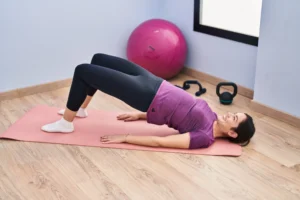
- Bridges strengthen the posterior chain, including gluteus maximus and hamstrings
- Standing hip abduction exercises can be performed throughout the working day
Tip 5 — Use a Supportive Cushion or Seat Modification
For ischial bursitis and general hip pain while sitting, a well-padded seat cushion or coccyx cutout cushion redistributes pressure away from the sitting bones and reduces direct bursal compression.
- Foam memory cushions reduce ischial tuberosity pressure in bursitis
- Coccyx/donut cushions can provide relief for posterior hip pain
- Lumbar rolls that maintain the natural lumbar curve also reduce hip flexor load in sitting
Best Ways to Reduce the Risk of Hip Pain While Sitting
Prevention is significantly easier than treatment for most hip conditions — these strategies reduce long-term risk:
- Maintain a healthy body weight — every kilogram of excess weight adds approximately 3 times the force through the hip joint in walking, and more in rising from chairs
- Stay consistently active — regular low-impact exercise (swimming, cycling, walking) maintains cartilage health and hip muscle strength without high-impact loading
- Stretch hip flexors daily — the kneeling hip flexor stretch and pigeon pose address the chronic shortening that prolonged sitting produces
- Avoid prolonged static sitting — no ergonomic setup fully compensates for more than 60-90 continuous minutes of sitting without movement
- Address lower limb biomechanical issues early — overpronation, leg length discrepancy, and hip alignment problems are more easily corrected before secondary hip pathology develops
- Warm up before sport — acute labral tears and muscle strains are the most preventable causes of hip pain in active adults
When to See a Doctor for Hip Pain While Sitting
Most hip pain while sitting that develops gradually and is mild to moderate can be initially managed with the tips above. However, seek specialist assessment if:
- Hip pain while sitting has been constant for more than 4-6 weeks without improvement
- Pain is severe enough to limit your working day or daily activities
- You feel a clicking, locking, or giving-way sensation within the hip
- Pain wakes you from sleep consistently
- Hip stiffness is progressively worsening over weeks or months
- Pain is accompanied by swelling, redness, or warmth around the hip joint — possible infection or inflammatory arthritis
Seek urgent medical attention if:
- Sudden severe hip pain following a fall — possible fracture
- Fever alongside hip pain — possible septic arthritis
- Unexplained significant weight loss alongside hip pain — requires urgent investigation
When Is Surgery Necessary for Hip Pain?
The majority of hip pain while sitting causes respond well to conservative management — physiotherapy, activity modification, corticosteroid injections, and lifestyle changes. Surgery is considered only when:
- Conservative treatment has been consistently applied for 3-6 months without adequate relief
- Imaging confirms structural damage requiring surgical intervention (labral tear, significant cartilage loss)
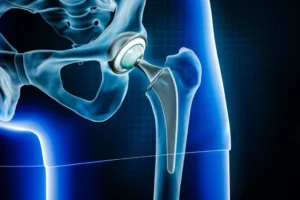
- Hip osteoarthritis has progressed to bone-on-bone contact with severe functional limitation — indicating total hip replacement
- A labral tear confirmed on MRI arthroscopy is symptomatic and has not responded to physiotherapy
- Ischial bursitis requiring surgical bursa removal after failed injection therapy
Frequently Asked Questions
1. What causes hip pain when sitting down?
Common causes include hip osteoarthritis, ischial bursitis, piriformis syndrome, iliopsoas tendinopathy, and labral tears. The pain’s location, timing, and pattern can help identify the cause.
2. What is the best way to relieve hip pain?
Adjust your sitting position, take movement breaks every 30–45 minutes, use heat or ice, and strengthen the gluteal muscles. Constant pain may benefit from targeted physiotherapy.
3. How do I know if my hip pain is muscular or joint?
Muscular pain is often triggered by specific movements or stretches, while joint pain may feel deep in the groin with stiffness and limited movement. Imaging can help confirm the cause.
4. What disease starts with hip pain?
Hip pain can occur with conditions such as rheumatoid arthritis, ankylosing spondylitis, avascular necrosis, and rarely, bone cancer. Constant pain with fever, weight loss, or other systemic symptoms needs medical evaluation.
5. What does cancerous hip pain feel like?
Cancer-related hip pain is often deep, persistent, and worse at night rather than improving with rest or position changes. Unexplained weight loss, fatigue, or fever may also occur and require prompt medical evaluation.
Conclusion
Hip pain while sitting is rarely a single, simple problem — but it is almost always a solvable one when properly diagnosed and managed. Whether the cause is a tight piriformis muscle, early hip arthritis, labral pathology, or ischial bursitis, there is an evidence-based treatment pathway that produces meaningful improvement.
Early assessment is consistently the most important factor in faster, more complete recovery. Conditions that respond easily to physiotherapy today frequently become surgical problems if left unaddressed for months or years.
Prime Ortho — Best Orthopedic Hospital in East Delhi — provides expert hip pain assessment, modern diagnostic imaging, and comprehensive non-surgical and surgical treatment options for all causes of hip pain — delivered by experienced orthopaedic specialists committed to accurate diagnosis and personalised care.

Dr.Shekhar Srivastav
Robotic Joint Replacement Surgeon | Senior Orthopaedic Surgeon | Knee, Shoulder & Sport Injury Specialist