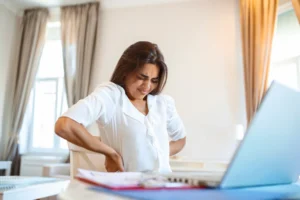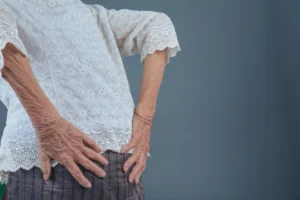
Hip pain can make daily activities like walking, climbing stairs, sitting, or sleeping uncomfortable. But what can cause hip pain in a woman? Common causes include muscle or tendon problems, arthritis, injuries, pregnancy-related changes, and referred pain from the lower back or pelvis.
Females may also experience hip pain due to hormonal changes, pelvic floor problems, or various gynecological conditions. While the location and nature of the pain can offer clues, a healthcare professional can help identify the underlying cause.
In this complete guide, we cover 7 common causes of hip pain in women, key symptoms, treatment options, and when to seek medical care.
Understanding Hip Pain in Women
Hip pain in women can originate in the hip joint itself, from the muscles and tendons surrounding it, from the lower spine and sacroiliac joint, or from gynaecological organs that share pain referral pathways with the hip region.
Women experience hip pain at higher rates than men for several structural reasons — a wider pelvis increases the Q-angle (the angle of the knee and hip), placing different mechanical loads on the hip joint and surrounding soft tissues. Hormonal changes during menstruation, pregnancy, and menopause also affect ligament laxity, bone density, and the pattern of pain experienced in the hip region.
The location of hip pain — front of the hip (groin), outer hip, inner thigh, buttock, or referred into the leg — provides the most essential diagnostic clue about which structure is actually causing the problem.
Symptoms of Hip Pain in Women to Recognise
Hip pain in women presents differently depending on the underlying cause — but these symptoms are the most commonly reported across all causes:
- Groin pain — aching or sharp pain felt in the hip crease or inner groin, often pointing to joint-specific pathology
- Outer hip pain — burning or aching over the side of the hip, most commonly from bursitis or IT band syndrome
- Buttock pain — felt in the gluteal region; can originate from the SI joint, piriformis, or hip joint
- Pain radiating down the thigh — nerve-related pain from the lumbar spine, piriformis, or labral pathology
- Stiffness after sitting — particularly with arthritis and labral tears
- Pain worse with weight-bearing — walking, climbing stairs, and single-leg activity
- Pain that disturbs sleep — lying on the affected hip, characteristic of trochanteric bursitis
7 Common Causes of Hip Pain in Women
Cause 1 — Hip Osteoarthritis
Hip osteoarthritis is the most common cause of deep hip joint pain in women over 50 — and women develop hip arthritis at a higher rate than men, particularly after menopause when oestrogen loss accelerates cartilage breakdown.
Osteoarthritis causes progressive degeneration of the articular cartilage within the hip joint — eventually producing bone-on-bone contact, chronic pain, and reduced range of motion.
Characteristic symptoms:
- Deep groin or anterior hip pain — felt inside the hip crease
- Morning stiffness lasting 15-30 minutes
- Pain worsening with prolonged walking, stair climbing, and sitting in low chairs
- Crepitus — a grinding or clicking sensation within the joint
- Progressive loss of hip internal rotation
Cause 2 — Trochanteric Bursitis (Greater Trochanteric Pain Syndrome)
Trochanteric bursitis is the most common cause of outer hip pain in women — significantly more prevalent in women than men due to the wider female pelvis and greater hip-to-knee angle. It involves inflammation of the bursa (a fluid-filled sac) over the greater trochanter — the bony prominence on the outer hip.
Characteristic symptoms:
- Burning or aching pain on the outer side of the hip
- Pain that worsens when lying on the affected side — a particularly disruptive nighttime complaint
- Tenderness on direct pressure over the outer hip bone
- Pain worsening on stairs, prolonged walking, and rising from a chair
Cause 3 — Hip Labral Tear
The acetabular labrum is a ring of soft cartilage that helps deepen and support the hip socket. A labral tear can cause hip pain, especially in active women aged 20–45. It is often linked to femoroacetabular impingement (FAI), a condition where the hip bones rub against each other abnormally.
Characteristic symptoms:
- Deep anterior hip or groin pain — often described as pain inside the hip crease
- A clicking, locking, or catching sensation in the hip
- Pain that worsens with deep hip flexion — sitting in low chairs, prolonged car journeys
- Stiffness and aching after periods of inactivity
- Common in dancers, runners, and yoga practitioners
Cause 4 — Endometriosis and Gynaecological Causes
One of the most uniquely female causes of hip pain is endometriosis — a condition where endometrial tissue grows outside the uterus, potentially involving the hip flexors, the sciatic nerve, or the pelvic sidewall. This produces cyclical hip and groin pain that worsens predictably during and around menstruation.
Characteristic symptoms:
- Cyclical hip pain — clearly correlated with the menstrual cycle
- Deep pelvic pain alongside hip discomfort
- Pain radiating from the hip down the leg during menstruation (“sciatic endometriosis”)
- Associated with heavy or painful periods, difficulty conceiving
Other gynaecological causes producing referred hip pain include ovarian cysts (particularly left or right ovarian cysts producing ipsilateral hip pain) and uterine fibroids.
Cause 5 — Piriformis Syndrome
The piriformis is a small but clinically crucial muscle deep in the buttock that can compress the sciatic nerve — producing buttock and hip pain that radiates down the leg in a pattern that closely mimics lumbar disc sciatica. Women are more susceptible to piriformis syndrome due to the wider angle of the female pelvis placing different mechanical loads on the piriformis muscle.
Characteristic symptoms:
- Deep buttock pain that may radiate down the back of the thigh
- Pain worsened by sitting for prolonged periods, climbing stairs, and hip rotation
- Tenderness deep in the buttock on palpation
- Worsening with prolonged car journeys
Cause 6 — Stress Fractures of the Femoral Neck
Stress fractures of the femoral neck are disproportionately common in women — particularly in those with osteoporosis, amenorrhoea, or the “female athlete triad” (low energy availability, menstrual dysfunction, and low bone density). These fractures occur without high-impact trauma — they develop from repeated low-level loading on bone that lacks sufficient density to withstand cumulative stress.
Characteristic symptoms:
- Groin pain that worsens progressively with activity and weight-bearing
- Pain at rest in more advanced cases
- No specific injury event — gradual onset
- Particularly common in female distance runners, military recruits, and postmenopausal women with osteoporosis
Why this matters: A femoral neck stress fracture that is missed or ignored can progress to a complete fracture — a surgical emergency. Any woman with progressively worsening groin pain with activity requires urgent imaging.
Cause 7 — Sacroiliac Joint Dysfunction
The sacroiliac joint connects the sacrum to the ilium of the pelvis — and SI joint dysfunction is significantly more common in women due to the wider female pelvis, greater ligamentous laxity (particularly during pregnancy and postpartum), and hormonal influences on joint stability.
Characteristic symptoms:
- Pain felt directly over the SI joint — the dimple area at the lower back, just above the buttock
- Pain that may radiate into the buttock, groin, or upper thigh
- Worsens with single-leg weight-bearing — going up stairs, standing on one leg
- Particularly common during pregnancy and in the postpartum period
- Reproduced by specific SI joint provocation tests
Treatments for Hip Pain in Women
Treatment is determined by the specific cause — but these approaches are broadly effective across most causes of female hip pain:
Non-Surgical Treatment
Physiotherapy — the most important first-line treatment:
- Hip abductor and gluteal strengthening to reduce joint load
- SI joint stabilisation exercises during and after pregnancy
- Labral rehabilitation — sport-specific hip movement retraining
- Piriformis stretching and sciatic nerve mobilisation for piriformis syndrome
Medications:
- NSAIDs for acute pain and inflammation
- Hormone therapy discussion with a gynaecologist for menopause-related hip arthritis acceleration
- Bisphosphonates or calcium supplementation for osteoporosis-related risk reduction
Surgical Treatment (When Required)
- Hip arthroscopy — for confirmed labral tears and femoroacetabular impingement
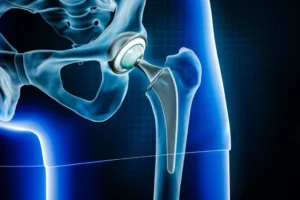
- Total hip replacement — for end-stage hip osteoarthritis producing severe functional limitation
- Surgical management of endometriosis — in collaboration with gynaecology, when medical management is insufficient
- Femoral neck fracture fixation — urgent surgery for complete stress fractures or displaced femoral neck fractures
How to Keep Your Hips Healthy as a Woman
Prevention is more straightforward than treatment for most hip conditions — these strategies meaningfully reduce long-term risk:
- Maintain a healthy body weight — every kilogram of excess weight adds 3-4 times the load through the hip joint in walking
- Build and maintain bone density throughout life — adequate calcium (1,000-1,200mg/day), Vitamin D (800-1,000 IU/day), and weight-bearing exercise
- Strengthen hip abductors and glutes — these muscles protect the joint from excessive loading
- Avoid prolonged static sitting — move every 45-60 minutes to prevent hip flexor shortening and SI joint stiffness
- Manage menstrual health and hormonal balance — oestrogen plays a direct and crucial role in cartilage and ligament health
- Regular bone density screening — from age 65, or earlier if risk factors (early menopause, low BMI, steroid use, family history) are present
When to See a Doctor for Hip Pain
Most mild hip pain from muscle strain or overuse resolves with physiotherapy and activity modification. Seek specialist assessment if:
- Hip pain has been constant for more than 4-6 weeks without clear improvement
- Pain is severe enough to limit your working day or sleep
- You notice clicking, locking, or giving way in the hip joint
- Hip pain is cyclical and clearly related to your menstrual cycle — possible endometriosis
- Pain is accompanied by groin swelling or skin changes
- Progressive worsening of activity-related groin pain — possible stress fracture
Seek urgent care immediately if:
- Sudden severe hip pain following a fall — possible fracture
- Inability to bear weight after an injury
- Fever alongside hip pain and swelling — possible joint infection
Frequently Asked Questions
1. What is the best way to relieve hip pain in women?
Relief depends on the cause. Physiotherapy, appropriate pain medication, heat for muscle-related pain, and activity modification may help. Long-term relief usually requires treating the underlying cause.
2. How can I tell if my hip pain is serious?
Seek prompt medical assessment if pain follows a fall, you cannot bear weight, or it is severe and constant. Fever, worsening pain, swelling, or neurological symptoms in the leg also require medical evaluation.
3. Where do women typically feel hip pain?
Hip pain may occur in the groin, outer hip, buttocks, or inner thigh, depending on the cause. The location can provide useful clues, but it does not confirm the diagnosis.
4. What diseases can start with hip pain in women?
Hip pain may occur with osteoarthritis, rheumatoid arthritis, avascular necrosis, endometriosis, ovarian cysts, stress fractures, and other conditions. Hip pain with fever, unexplained weight loss, or multiple affected joints should be evaluated promptly.
5. Will hip pain go away on its own?
Mild muscle strains may improve with rest and gentle movement, but conditions such as arthritis, labral tears, bursitis, or stress fractures may require targeted treatment. Constant or worsening pain should be assessed by a healthcare professional.
Conclusion
Hip pain in women is rarely a single, simple problem — but it is almost always identifiable and treatable when assessed by an experienced orthopaedic specialist who understands the anatomical, hormonal, and gynaecological factors unique to female hip health. Whether the cause is early arthritis, labral pathology, trochanteric bursitis, or referred gynaecological pain, the right diagnosis changes everything about the treatment pathway.
Prime Ortho — Best Orthopedic Hospital in East Delhi — provides expert hip pain assessment and comprehensive treatment for women — from accurate diagnosis through physiotherapy, injection therapy, and surgical options — delivered by experienced orthopaedic specialists.

Dr. Shekhar Srivastav
Robotic Joint Replacement Surgeon | Senior Orthopaedic Surgeon | Knee, Shoulder & Sport Injury Specialist