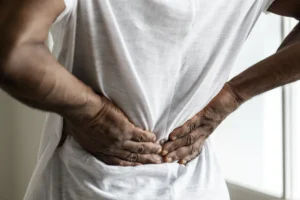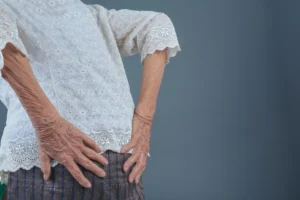

Hip and buttock pain can make daily activities such as walking, sitting, climbing stairs, and sleeping uncomfortable. The pain may come from the hip joint, surrounding muscles and tendons, or the lower back and nerves. Identifying the underlying cause is crucial because treatment varies by condition.
If you experience hip and buttock pain that persists, worsens, or limits your movement, a medical assessment can help determine the next steps. This complete guide explains seven common causes, available treatments, exercises, and warning signs you should not ignore.
Understanding Hip and Buttock Pain
Hip and buttock pain refers to discomfort felt anywhere in the region spanning the hip joint, the outer hip, the gluteal muscles, and the deep buttock — an anatomically complex area where multiple structures share overlapping pain referral patterns.
This complexity is clinically essential because pain felt in the buttock does not always originate there — the lumbar spine, sacroiliac joint, hip joint, and sciatic nerve can all refer pain into the buttock and outer hip region. Similarly, pain felt as hip pain often originates from the lower back rather than the hip joint itself.
Precise diagnosis — identifying the specific structure generating the pain — is the foundation of effective treatment. This is why hip and buttock pain that does not resolve with simple rest and analgesics requires professional assessment rather than prolonged self-management.
7 Major Causes of Hip and Buttock Pain
Cause 1 — Piriformis Syndrome
The piriformis muscle — deep in the buttock — compresses the sciatic nerve when tight or inflamed, producing buttock pain that closely mimics lumbar sciatica and requires accurate differentiation for correct treatment.
Characteristic symptoms:
- Deep buttock pain radiating down the back of the thigh
- Worsens with prolonged sitting, stair climbing, and hip rotation
- Tenderness on deep palpation over the piriformis
- More common in women due to a wider pelvic angle
Cause 2 — Sciatica (Lumbar Nerve Root Compression)
Sciatica is a symptom pattern — not a diagnosis — caused by compression of the L4, L5, or S1 nerve roots from a disc herniation, spinal stenosis, or spondylolisthesis, producing pain that travels through the buttock and down the leg.
Characteristic symptoms:
- Shooting, burning, or electric pain from the lower back through the buttock into the leg
- Numbness or tingling along the sciatic nerve distribution
- Worsens with sitting, coughing, and forward bending
- Confirmed by lumbar MRI
Cause 3 — Sacroiliac Joint Dysfunction
The SI joint connects the sacrum to the pelvis — and its dysfunction is a frequently overlooked cause of hip and buttock pain, particularly in women and during or after pregnancy due to hormonal effects on ligament laxity.
Characteristic symptoms:
- Pain over the SI joint — the dimple area just above the buttock
- Radiates into the buttock, groin, and upper thigh
- Worsens with single-leg weight-bearing and stair climbing
- Reproduced by SI joint provocation tests (FABER, Gaenslen’s)
Cause 4 — Hip Osteoarthritis
The most common cause of progressive hip and buttock pain in adults over 50 — deep groin pain radiates into the buttock and outer thigh as cartilage degenerates and surrounding muscles compensate for reduced joint function.
Characteristic symptoms:
- Deep groin or anterior hip pain radiating into the buttock
- Morning stiffness lasting 15-30 minutes
- Progressively reduced pain-free walking distance
- Crepitus — grinding or clicking in the hip joint
Cause 5 — Gluteal Tendinopathy
Degeneration of the gluteus medius or minimus tendons at the greater trochanter — frequently misdiagnosed as trochanteric bursitis — producing outer hip and buttock pain; most common in postmenopausal women and distance runners.
Characteristic symptoms:
- Deep aching pain over the outer hip and buttock
- Worsens with walking, stair climbing, and lying on the affected side
- Tenderness over the greater trochanter on palpation
- Associated with gluteal weakness and Trendelenburg gait
Cause 6 — Ischial Bursitis (Weaver’s Bottom)
Inflammation of the ischial bursa — between the sitting bone and overlying gluteal muscle — produces characteristic pain directly at the ischial tuberosity, most commonly in cyclists and prolonged desk workers.
Characteristic symptoms:
- Pain directly over the sitting bone — worsens with prolonged sitting on hard surfaces
- Eases on standing; returns quickly on sitting
- Tenderness on direct pressure over the ischial tuberosity
Cause 7 — Avascular Necrosis (AVN) of the Femoral Head
AVN is bone death in the femoral head from interrupted blood supply — caused by steroid use, alcohol, trauma, or blood disorders — producing progressive hip joint destruction with referred pain into the groin, buttock, and thigh.
Characteristic symptoms:
- Deep groin and anterior hip pain radiating into the buttock
- Progressive weight-bearing pain with no specific injury event
- Normal X-ray in early stages — MRI is required for accurate diagnosis
- Urgent orthopaedic assessment needed to prevent femoral head collapse
Why Does Hip and Buttock Pain Worsen When Sitting or Walking?
The relationship between activity and pain provides important diagnostic clues:
Pain that worsens with sitting:
- Piriformis syndrome — sitting compresses the piriformis against the sciatic nerve
- Ischial bursitis — direct pressure on the inflamed bursa
- Sciatica — sitting increases posterior disc pressure and nerve root tension
Pain that worsens with walking:
- Hip osteoarthritis — joint compression with every step
- Gluteal tendinopathy — tendon loading during the stance phase of walking
- Neurogenic claudication from lumbar stenosis — walking increases spinal canal pressure
Pain that worsens with single-leg stance (going upstairs):
- SI joint dysfunction — one-sided loading provokes the joint
- Gluteal tendinopathy — single-leg loading stresses the gluteal tendons maximally
How Is Hip and Buttock Pain Diagnosed?
Accurate diagnosis requires a structured clinical and investigative approach:
Clinical assessment:
- Detailed history — location, character, radiation, aggravating and relieving factors
- Physical examination — hip range of motion, SI joint provocation tests, straight leg raise, piriformis FAIR test, palpation of the greater trochanter and ischial tuberosity
- Gait observation — identifying Trendelenburg pattern or antalgic gait
Investigations:
| Investigation | Best For |
| X-ray (hip and pelvis) | Hip OA, AVN (late stages), fractures |
| MRI hip and pelvis | AVN (early), labral tears, gluteal tendinopathy |
| MRI lumbar spine | Disc herniation, stenosis causing sciatica |
| Ultrasound | Bursal inflammation, tendon pathology |
| Diagnostic injection | Confirms specific structure (SI joint, piriformis, bursa) |
Can Exercises Help Relieve Hip and Buttock Pain?
Yes — targeted exercises are one of the most effective treatments for most causes of hip and buttock pain. The specific exercises depend on the cause:
For piriformis syndrome:
- Piriformis stretch — lying on the back, cross the ankle over the opposite knee and gently pull the thigh toward the chest
- Hip external rotator strengthening
For gluteal tendinopathy:
- Isometric hip abduction — pressing the leg outward against a wall in standing
- Progressive loading with single-leg bridges — building tendon load capacity
- Avoid hip adduction stretches — these compress the gluteal tendons and worsen tendinopathy
For SI joint dysfunction:
- SI joint stabilisation exercises — clams, side-lying hip abduction
- Core and pelvic floor strengthening
- Avoid asymmetric loading exercises in the early phase
For hip osteoarthritis:
- Aquatic exercise — reduces joint load while building muscle strength
- Seated hip flexion exercises
- Quadriceps and hip abductor strengthening
Treatment Options for Hip and Buttock Pain
Non-Surgical Treatment
Physiotherapy: The cornerstone of treatment for most causes — targeted muscle strengthening, joint mobilisation, neural mobilisation for sciatica, and movement retraining.
Medications:
- NSAIDs for acute inflammation
- Neuropathic agents (gabapentin, pregabalin) for sciatic or nerve-related buttock pain
- Topical anti-inflammatory gels for localised bursal or tendon pain
Surgical Treatment
- Hip arthroscopy — for labral tears and femoroacetabular impingement
- Core decompression — for early AVN to prevent femoral head collapse
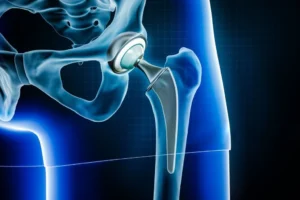
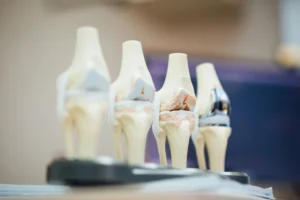
- Total hip replacement — for end-stage hip osteoarthritis or advanced AVN
- Lumbar microdiscectomy or decompression — for confirmed disc herniation or stenosis causing sciatica
Can Hip and Buttock Pain Lead to Hip Replacement Surgery?
Hip replacement surgery is considered for hip and buttock pain specifically caused by end-stage hip osteoarthritis or avascular necrosis when:
- Pain severely limits walking capacity — less than 15-20 minutes before significant pain
- Night pain consistently disturbs sleep
- Daily function — dressing, climbing stairs, rising from chairs — is significantly impaired
- Conservative management (physiotherapy, injections, medication) has failed to provide adequate sustained relief
- Imaging confirms Grade 3-4 joint space narrowing or significant femoral head collapse from AVN
For most other causes of hip and buttock pain — piriformis syndrome, SI joint dysfunction, gluteal tendinopathy, sciatica — surgery is rarely required, and non-surgical treatment produces excellent outcomes.
When Should You See an Orthopaedic Doctor?
See a specialist if hip and buttock pain:
- Has been constant for more than 4- 6 weeks without improvement
- Is worsening progressively
- Is accompanied by neurological symptoms — leg weakness, numbness, or foot drop
- Significantly limits walking capacity or sleep
- Followed a fall or injury — possible fracture or AVN
Seek emergency care immediately if:
- Sudden severe hip pain after a fall in an elderly or osteoporotic patient — possible hip fracture
- Progressive leg weakness and bladder or bowel changes — possible cauda equina syndrome
- Fever alongside hip and buttock pain — possible septic arthritis or spinal infection
Frequently Asked Questions
1. Why do my hip and buttocks hurt?
Hip and buttock pain most commonly originates from piriformis syndrome, sciatica, sacroiliac joint dysfunction, hip osteoarthritis, or gluteal tendinopathy. The specific cause is identified by where the pain is felt, whether it radiates into the leg, and what positions or movements aggravate it.
2. How do I treat hip and buttock pain?
Most cases respond to physiotherapy, NSAIDs for acute inflammation, and activity modification. Corticosteroid injections provide targeted relief for bursitis, SI joint dysfunction, and piriformis syndrome. Surgery is reserved for structural causes — AVN, end-stage hip OA, or disc herniation with neurological deficit.
3. What are the red flags for buttock pain?
Seek urgent assessment for: buttock pain after trauma, fever alongside buttock pain, progressive leg weakness or foot drop, loss of bladder or bowel control, unexplained weight loss, or known cancer history with new buttock pain.
4. Is walking good for buttock pain?
Gentle walking at a comfortable pace is beneficial for most causes — maintaining muscle activation and preventing stiffness. However, walking through severe or worsening pain delays diagnosis. Comfortable-level activity combined with clinical assessment is the right approach.
5. What diseases can start with hip pain?
Hip and buttock pain can be the presenting symptom of hip osteoarthritis, avascular necrosis, rheumatoid arthritis, ankylosing spondylitis, lumbar disc herniation, or — rarely — bone metastasis. Systemic symptoms (fever, weight loss, bilateral joint involvement) warrant urgent investigation.
6. When should I worry about buttock pain?
Seek urgent assessment when buttock pain is accompanied by neurological symptoms (leg weakness, numbness, foot drop), follows trauma, is associated with fever or systemic illness, is constant regardless of position, or is rapidly progressive over days.
7. What is the best sleeping position for hip and buttock pain?
Side sleeping on the non-painful side with a pillow between the knees is optimal for most causes. For piriformis syndrome, back sleeping with a pillow under the knees reduces muscle tension. Avoid stomach sleeping — it worsens most hip and buttock pain causes.
8. Can hip and buttock pain go away on its own?
Mild pain from muscle strain typically resolves within 1-3 weeks with rest and gentle movement. Structural causes — sciatica, gluteal tendinopathy, hip OA, AVN — do not resolve without targeted treatment. Pain constant beyond 4-6 weeks requires specialist assessment.
9. Where are the pressure points for hip pain relief?
Commonly used acupressure points include GB30 (outer buttock, one-third between hip bone and sacrum), GB34 (outer knee below the fibula head), and BL54 (centre of the buttock crease). These are complementary measures — not substitutes for clinical diagnosis and treatment.
10. Can buttock pain go away without treatment?
Acute muscle strain typically resolves within 1-2 weeks. Sciatica may improve over 6-12 weeks if nerve irritation settles. Structural causes — gluteal tendinopathy, SI joint dysfunction, AVN, hip arthritis — worsen without targeted treatment and should not be managed with passive waiting alone.
Conclusion
Hip and buttock pain is one of the most common orthopaedic presentations — and one of the most treatable when correctly diagnosed. From piriformis syndrome and sciatica to hip osteoarthritis and AVN, each cause has a specific, effective treatment pathway that can restore comfortable function and prevent the pain from becoming chronic.
The most essential step is an accurate diagnosis — which requires clinical examination and, when indicated, targeted imaging rather than generic back or hip treatment that may miss the specific structure involved.
Prime Ortho — Best Orthopedic Hospital in Delhi NCR — provides expert hip and buttock pain assessment and comprehensive treatment — from accurate diagnosis through physiotherapy, injection therapy, and surgical options — delivered by experienced orthopaedic specialists across East Delhi and NCR.

Dr.Shekhar Srivastav
Robotic Joint Replacement Surgeon | Senior Orthopaedic Surgeon | Knee, Shoulder & Sport Injury Specialist