Tight hip flexors can make daily activities such as walking, climbing stairs, standing, and exercising uncomfortable. Spending long hours sitting, limited physical activity, and repetitive movements can contribute to hip stiffness and reduced flexibility.
The good news is that appropriate hip flexor stretches can help improve flexibility, maintain hip mobility, and make everyday movements more comfortable.
Whether you experience tightness after sitting for long hours or want to improve your flexibility, these 10 hip flexor stretches can help you work on your mobility. Learn how to perform each exercise correctly, how often to practise, and when to seek medical advice.
What Are Hip Flexors and Why Are They Important?
The hip flexors are a group of muscles at the front of the hip, mainly the iliopsoas (psoas major and iliacus) and the rectus femoris (part of the quadriceps). They lift your knee toward your chest and help you walk, run, climb stairs, and bend forward.
Because the psoas attaches to the lumbar spine, tight hip flexors can pull on the lower back and tilt the pelvis forward. That is why hip flexor tightness often shows up as back pain, not just hip pain.
What Causes Tight Hip Flexors?
Tight hip flexors can develop due to daily habits, prolonged inactivity, repetitive movements, or muscle imbalances. Understanding the underlying causes can help you make lifestyle changes and choose the right exercises to improve hip flexibility and mobility.
- Prolonged sitting: Hours at a desk or driving keep the hip flexors in a shortened position
- Sedentary lifestyle: Low movement weakens the glutes and tightens the front of the hip
- Overuse in sport: Running, cycling, football, and dance repeatedly load these muscles
- Weak glutes and core: The hip flexors work overtime to compensate
- Poor posture: An anterior pelvic tilt keeps the muscles shortened
- Lack of stretching: Skipping warm-ups and cool-downs
- Previous injury: Strains or hip and lower back problems can leave lasting tightness
10 Best Hip Flexor Stretches to Relieve Tightness
Before you start: Warm up with 5 minutes of walking, stretch gently to the point of mild tension (never sharp pain), and breathe slowly. Hold each stretch for 20-30 seconds unless stated.
1. Half-Kneeling Hip Flexor Stretch
The classic stretch for the iliopsoas.
- Kneel on one knee with the other foot forward, using a cushion under the knee
- Tuck your pelvis under and gently shift forward until you feel a stretch at the front of the back hip
- Hold 30 seconds, then switch sides
2. Standing Lunge Stretch
A good option if kneeling is uncomfortable.
- Take a long step forward and keep the back leg straight
- Squeeze the back glute and lean slightly forward
- Hold 20-30 seconds each side
3. Kneeling Hip Flexor Stretch With Arm Reach
Adds a side stretch to target the psoas more deeply.
- From the half-kneeling position, raise the arm on the side of the back leg overhead
- Lean gently away from the back leg
- Hold 20-30 seconds each side
4. Supine Hip Flexor Stretch (Edge of Bed)
Gentle and good for stiff or sore backs.
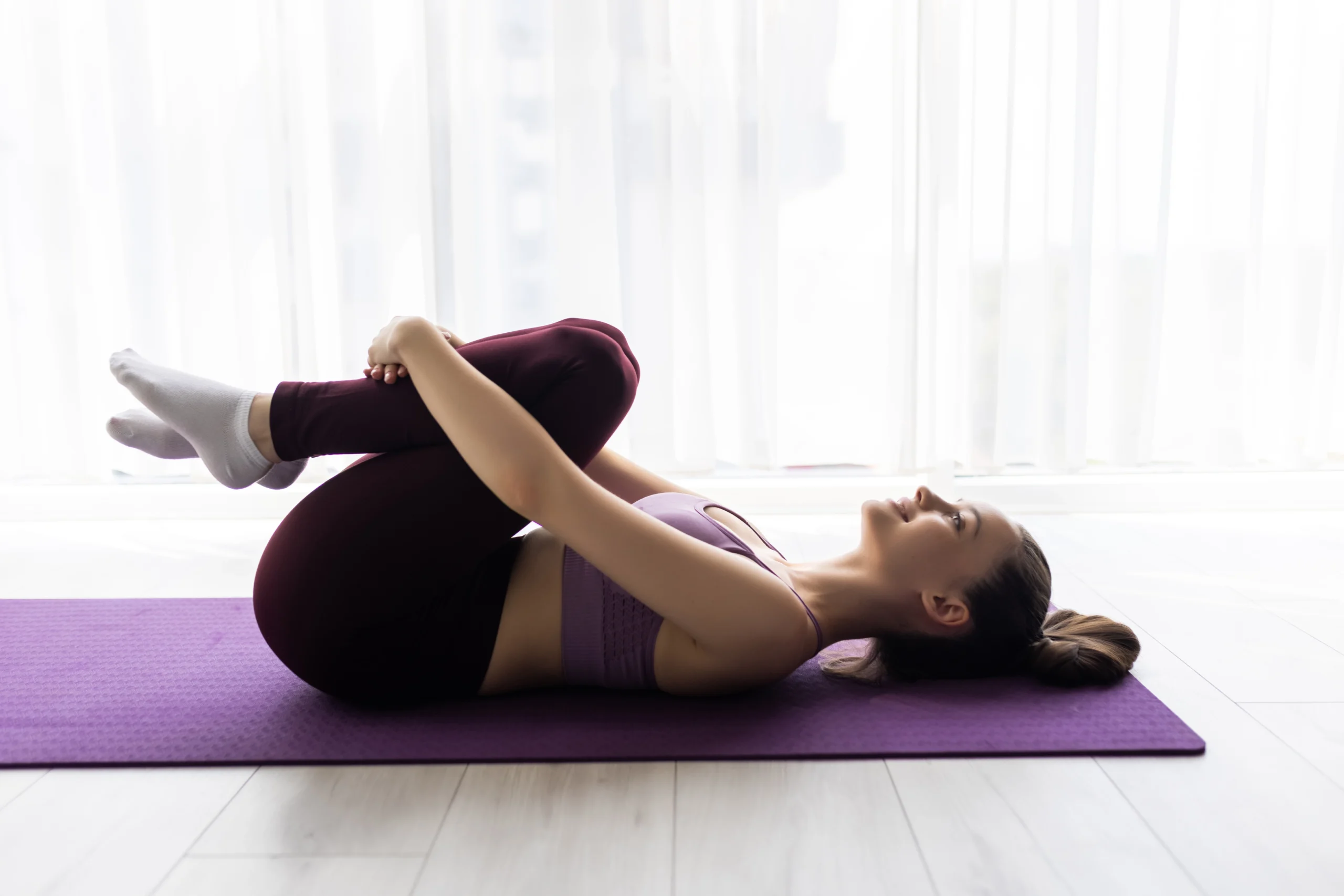
- Lie near the edge of a bed and hug one knee to your chest
- Let the other leg hang relaxed over the edge
- Hold 30 seconds on each side
5. Pigeon Pose
Stretches the hip flexors and the deep hip rotators.
- From hands and knees, bring one knee forward behind your wrist and extend the other leg back
- Lower your hips and fold forward gently
- Hold 30 seconds each side. Skip this if you have knee pain
6. Bridge With Hip Flexor Release
Combines glute activation with a hip opener.
- Lie on your back with knees bent and lift your hips
- Hold for 3-5 seconds, then lower slowly
- Repeat 10-12 times
7. Butterfly Stretch
Opens the inner hip and groin area.
- Sit with the soles of your feet together and knees dropped outward
- Sit tall and gently lean forward
- Hold 20-30 seconds
8. Couch Stretch
An advanced stretch for stubborn tightness.
- Kneel facing away from a couch or wall with the back foot raised on it
- Step the other foot forward and rise to an upright position
- Hold 20-30 seconds and stop if you feel knee pain
9. Cobra Stretch
Lengthens the front of the hips and abdomen.
- Lie face down with hands under your shoulders
- Press up gently, keeping your hips on the floor
- Hold 10-15 seconds; repeat 3 times
10. Standing Quad and Hip Flexor Stretch
Targets the rectus femoris, the hip flexor that crosses the knee.
- Stand and hold a wall, then pull one heel toward your buttock
- Keep the knees together and tuck the pelvis under
- Hold 20-30 seconds each side
Benefits of Hip Flexor Stretches for Hip Mobility
Regular hip flexor stretching does more than loosen the front of your hips. It improves how your hips, pelvis, and lower back work together, which makes daily movement easier and more comfortable.
- Better hip mobility: A wider range of motion makes walking, squatting, climbing stairs, and getting in and out of a car easier
- Less lower back pain: Lengthening the hip flexors reduces the pull on the lumbar spine and eases the forward pelvic tilt that strains the back
- Improved posture: The pelvis sits in a more neutral position, so you can stand and sit taller with less effort
- Fewer injuries: Flexible muscles are less prone to strains and overuse injuries, especially in runners, cyclists, and athletes
- Better athletic performance: A longer stride and better glute activation help you generate more power in running, squatting, and jumping
- Reduced stiffness: Eases the “locked” feeling in the hips after prolonged sitting, driving, or a long day at a desk
How Often Should You Stretch Your Hip Flexors?
Consistency matters more than intensity. A few gentle minutes every day work better than one long, aggressive session each week, and overstretching can irritate the muscle instead of releasing it.
- Daily is ideal for desk workers: Aim for 1-2 stretches daily, even if only for a few minutes
- 2-3 sets of 20-30 seconds per side: This is enough to lengthen the muscle without overstretching it
- After a workout, when muscles are warm: Warm muscles stretch more safely and effectively
- Every 45-60 minutes during long sitting: Stand up and do a quick lunge stretch to break up the shortened position
- Before bed, if you feel tight: A gentle supine stretch can help you relax and ease morning stiffness
Most people notice improvement in 2-4 weeks. For lasting results, pair stretching with glute and core strengthening, as tight hip flexors often come with weak supporting muscles.
Common Mistakes to Avoid When Stretching Hip Flexors
Even the right stretch can fail, or cause irritation, if it is done in the incorrect way. Avoiding these common errors helps you get more relief from every session and lowers the risk of injury.
- Stretching cold: Cold muscles are stiff and more prone to strain, so always warm up with a few minutes of walking first
- Arching the lower back: Tuck the pelvis under instead, or the stretch targets your lower back rather than your hip flexor
- Bouncing: Hold the stretch steadily rather than pulsing, since bouncing can trigger the muscle to tighten
- Pushing through sharp pain: A mild pull is normal, but sharp or pinching pain is a stop sign
- Skipping strengthening: Tight hips often come with weak glutes and core, so stretching alone gives only temporary relief
- Stretching only one side: Treat both sides, even if one feels worse, to keep the pelvis balanced
- Holding your breath: Slow, steady breathing helps the muscles relax and the stretch go deeper
- Overdoing it: Stretching several times a day for long periods can irritate the muscle, so stick to short, regular sessions
When Should You See an Orthopedic Doctor for Hip Pain?
Mild tightness usually improves with regular stretching and movement. But pain that persists, keeps returning, or comes with other symptoms may point to a joint, nerve, or spine problem that stretching cannot fix.
See a specialist if:
- Hip or groin pain lasts more than 2-4 weeks despite regular stretching
- You feel clicking, catching, or locking in the hip
- Pain wakes you at night or is present even at rest
- Pain spreads down the leg, or you notice numbness, tingling, or weakness
- You have had a fall or injury before the pain started
- Pain limits your walking, work, or everyday activities
Seek urgent care for:
- Sudden severe hip pain after a fall, or inability to bear weight
- Hip pain with fever, redness, or swelling
- Loss of bladder or bowel control with back pain
- Sudden weakness in one or both legs
Getting assessed in a timely manner helps identify the real cause, whether it is a muscle problem, a labral tear, hip arthritis, or a spine condition, so you can start the right treatment sooner.
Frequently Asked Questions
1. How do you release tight hip flexors?
Gentle stretches such as the half-kneeling stretch and standing lunge, along with glute strengthening and regular movement breaks, release tight hip flexors. Warming up first and holding each stretch for 20-30 seconds works best.
2. What are the symptoms of tight hip flexors?
Common signs are stiffness or tightness at the front of the hip, lower back ache, a short stride, difficulty standing up straight after sitting, and a pulling feeling in the groin or front of the thigh.
3. Does walking loosen tight hip flexors?
Yes, gentle walking warms and mobilises the hip flexors and helps relieve stiffness. Combine it with stretching, as walking alone may not fully lengthen the muscles.
4. Can tight hip flexors cause lower back pain?
Yes. The psoas muscle attaches to the lumbar spine, so tight hip flexors can tilt the pelvis forward and increase strain on the lower back.
5. How long does it take for hip flexor tightness to go away?
With daily stretching, many people notice improvement within 2-4 weeks. Chronic tightness from years of sitting can take 6-8 weeks or more.
6. How do I massage my hip flexors?
Lie face down on a foam ball or massage ball under the front of the hip and breathe slowly, rolling gently over tender areas for 1-2 minutes. Avoid pressing directly on the groin, and stop if pain is sharp.
7. What exercises should I avoid with tight hip flexors?
Avoid exercises that overload the hip flexors, such as repeated sit-ups, leg raises, and long periods of cycling without stretching. Reduce intensity if they cause pinching or pain.
8. What can be mistaken for hip flexor pain?
Groin strain, hip joint arthritis, a labral tear, a hernia, lower back problems, and SI joint pain can all feel like hip flexor pain, so constant pain needs a proper assessment.
9. What is the best pressure point to release tight hip flexors?
The psoas can be released with gentle pressure on the soft area just inside the hip bone on the front of the abdomen, but this is a sensitive area. A massage ball on the front of the hip is a safer option.
10. What is the root cause of tight hip flexors?
The main cause is staying in a seated, shortened position for long periods, often combined with weak glutes and core muscles that make the hip flexors overwork.
Conclusion
Tight hip flexors are common, but regular stretching can help improve flexibility and mobility. A few minutes of gentle hip flexor stretches, combined with regular movement breaks and glute strengthening, can help reduce stiffness and improve daily movement.
If stretching does not help or hip pain keeps returning, an underlying muscle, joint, or spinal condition may be responsible.
Prime Ortho — Best Orthopedic Hospital in Delhi NCR provides expert orthopedic evaluation and treatment for hip pain, joint problems, and mobility concerns. Consult experienced orthopedic specialists to identify the underlying cause of your symptoms and explore suitable non-surgical or surgical treatment options.

Dr.Shekhar Srivastav
Robotic Joint Replacement Surgeon | Senior Orthopaedic Surgeon | Knee, Shoulder & Sport Injury Specialist