
Knee pain caused by arthritis or joint damage can make even simple daily activities difficult, affecting walking, climbing stairs, and overall quality of life. For patients with severe knee problems, knee replacement surgery is often considered one of the most effective long-term treatment options.
Many patients ask an important question before surgery — what is the knee replacement surgery success rate? Understanding the success rate, recovery process, implant lifespan, and possible risks helps patients make informed treatment decisions with confidence.
This complete guide explains everything you should know about knee replacement surgery in simple and patient-friendly language.
Understanding Knee Replacement Surgery
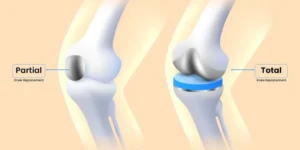
Knee replacement surgery — also called knee arthroplasty — replaces the damaged, arthritic surfaces of the knee joint with artificial implants made of metal and medical-grade plastic. These implants recreate smooth, pain-free movement by resurfacing the worn-out joint surfaces that arthritis has destroyed.
The surgery does not replace the entire knee — it replaces the damaged joint surfaces while preserving the surrounding bones, muscles, and most ligaments. When performed by an experienced surgeon with advanced implants, it consistently produces transformative results for patients who have exhausted conservative treatment options.
What Is the Success Rate of Knee Replacement Surgery in India?
The overall success rate of knee replacement surgery in India is 90-95% — matching international standards in leading orthopaedic centres. This means the vast majority of patients achieve significant and lasting improvement in pain, mobility, and quality of life.
How “success” is measured in knee replacement:
- Significant reduction in pain — confirmed at 6 and 12 months post-surgery
- Restored functional mobility — walking, stair climbing, and daily independence
- High patient satisfaction scores at 1, 5, and 10 years
- Implant survival — the percentage of implants still functioning without revision surgery
Knee replacement surgery success rate in India — key statistics:
| Metric | Success Rate |
| Overall patient satisfaction at 12 months | 85-92% |
| Significant pain relief achieved | 90-95% |
| Implant survival at 10 years | 90-95% |
| Implant survival at 15 years | 82-90% |
| Implant survival at 20 years | 75-85% |
| Revision surgery rate within 5 years | 2-5% |
These statistics apply to primary total knee replacement performed by an experienced orthopaedic surgeon. Robotic knee replacement consistently achieves the higher end of these ranges due to superior implant alignment accuracy.
Key Factors Influencing Knee Replacement Success Rates
Success is never guaranteed by the surgery alone. These factors directly determine how well a patient does — both short-term and long-term.
1. Surgeon Experience
Experienced orthopedic surgeons generally achieve better implant positioning, fewer complications, and improved patient satisfaction. Proper surgical planning plays a crucial role in long-term success.
2. Implant Accuracy and Alignment
Correct implant alignment helps improve knee movement and implant lifespan. Advanced robotic-assisted techniques may improve surgical precision and reduce alignment-related problems.
3. Patient Health and BMI
Overall health significantly affects recovery and implant durability. Conditions like obesity, uncontrolled diabetes, and smoking may increase complication risks and slow healing.
4. Physiotherapy and Rehabilitation
Consistent physiotherapy after surgery is important for improving strength, flexibility, and walking ability. Patients who actively follow rehabilitation plans usually recover faster.
5. Implant Quality
High-quality knee implants are designed for better durability and long-term performance. Choosing the right implant based on age, activity level, and joint condition is important for successful outcomes.
Average Lifespan of a Knee Replacement — How Long Does It Last?
Modern knee implants are designed to last around 15–25 years, and many patients experience good long-term results with proper care and rehabilitation.
Lifespan varies based on:
- Patient age at the time of surgery — younger, more active patients place a higher demand
- Implant brand and material — high-quality crosslinked polyethylene inserts last significantly longer than earlier generation plastic components
- Body weight — every kilogram of excess weight adds 3-4kg of compressive stress on the knee implant
- Activity level — high-impact activities accelerate implant wear
- Implant alignment — correctly aligned implants wear evenly; malaligned ones wear unevenly and fail earlier
Key Factors That Affect Implant Longevity
To maximise how long your knee replacement lasts:
- Maintain a healthy weight — the most impactful lifestyle factor for implant longevity
- Exercise regularly with low-impact activity — walking, swimming, cycling, yoga strengthen supporting muscles without stressing the implant
- Attend all follow-up appointments — implant wear is detectable on imaging long before symptoms develop
- Avoid high-impact activities permanently — running, jumping, and contact sports accelerate plastic insert wear
- Take bone health seriously — Vitamin D and calcium adequacy support the bone that holds the implant in place
- Report any new pain or swelling immediately — early detection of loosening or wear enables timely intervention before more complex revision is needed
Signs That a Knee Replacement May Need Revision
Most knee replacements work well for years without issues. However, these warning signs should prompt immediate orthopaedic evaluation:
- Increasing instability — the knee feels like it is giving way
- Significant swelling that does not reduce over weeks
- A clicking, grinding, or catching sensation that was not present before
- Stiffness that is progressively worsening after an initial good recovery
- Visible changes to the knee shape or alignment
- Fever or warmth around the knee joint — possible infection
If you notice any of these signs, do not wait. Early assessment allows simpler intervention — delayed assessment leads to more complex revision surgery.
Benefits of Knee Replacement Surgery
For the right patient, the benefits are substantial and life-changing:
- Pain relief — the most immediate and consistent benefit; most patients report significant improvement within weeks
- Restored mobility — return to walking, stair climbing, and daily independence
- Improved sleep — night pain is one of the first symptoms to resolve post-surgery
- Reduced medication dependence — most patients discontinue daily painkillers
- Better mental health — chronic pain significantly impacts mood and wellbeing; its resolution often produces marked improvement
- Long-lasting results — 90%+ of implants survive 15 years with appropriate care
Risks of Knee Replacement Surgery
No surgery is without risk — and patients deserve clear, honest information:
Common short-term risks:
- Post-operative swelling and pain — expected and managed with medication and physiotherapy
- Deep Vein Thrombosis (DVT) — blood clots in leg veins; prevented with blood thinners and early movement
- Wound infection — occurs in 1-2% of cases; managed with antibiotics or further surgery if deep
Less common risks:
- Nerve or blood vessel injury — rare in experienced hands
- Implant malalignment — reduced significantly with the robotic-assisted technique
- Stiffness (arthrofibrosis) — prevented by aggressive early physiotherapy
- Periprosthetic fracture — fracture around the implant, typically following significant trauma
Long-term risks:
- Implant loosening — occurs gradually over years, most commonly after 15+ years
- Plastic insert wear — managed with timely revision if detected early
- Infection around the implant — a serious complication requiring specialised treatment
Knee Replacement Cost in India
Knee replacement cost in India is significantly more cost-effective than equivalent procedures in the UK, US, or Australia — without compromising on surgical quality at leading centres.
| Procedure | Estimated Cost Range (India) |
| Total Knee Replacement (Indian implant) | ₹1,80,000 – ₹3,00,000 |
| Total Knee Replacement (Premium imported) | ₹2,50,000 – ₹4,50,000 |
| Robotic Total Knee Replacement | ₹3,50,000 – ₹6,00,000 |
| Bilateral Knee Replacement | ₹3,50,000 – ₹8,00,000+ |
Most health insurance policies in India cover knee replacement surgery. Always verify implant sub-limits, waiting period clauses, and request pre-authorisation before scheduling surgery.
How to Extend the Life of Your Knee Implant
The most important things patients can do to maximise implant lifespan:
- Keep body weight in a healthy range — the highest-impact modifiable factor
- Perform low-impact exercise consistently — strengthens muscles that support the implant
- Never skip follow-up appointments — routine imaging detects wear before symptoms appear
- Avoid kneeling directly on the operated knee for extended periods
- Wear supportive footwear — proper alignment of the foot and ankle reduces lateral stress on the implant
- Never ignore new symptoms — early intervention is always simpler than late intervention
Future Outlook of Knee Replacement Surgery
Knee replacement technology is improving rapidly, leading to better recovery and long-term results for patients.
Major Advancements Include:
- Robotic-assisted surgery: Advanced robotic systems improve implant alignment and surgical precision.
- Improved implant materials: Advanced implants are designed to last longer with reduced wear.
- Personalised implants: Custom-fit implants based on scans may improve comfort and movement.
- Faster recovery protocols: Many patients now experience shorter hospital stays and quicker rehabilitation.
The future of knee replacement surgery is becoming more accurate, durable, and patient-friendly.
Frequently Asked Questions
1. Can you fully recover from knee replacement surgery?
Yes, most patients recover successfully within 6–12 months and regain better mobility, reduced pain, and improved daily function with proper physiotherapy.
2. Is knee replacement surgery 100% successful?
No surgery is completely risk-free, but knee replacement has a very high success rate, with most patients experiencing long-term pain relief and better movement.
3. What happens 20 years after knee replacement?
Many modern knee implants continue functioning well after 20 years, although some patients may eventually require revision surgery due to implant wear.
4. What is the biggest complaint after knee replacement?
The most common complaints are temporary stiffness, swelling, and slower recovery of strength during the first few months after surgery.
5. Which age is best for knee replacement?
Knee replacement is commonly recommended between the ages of 55 and 75, depending on joint damage, pain severity, activity level, and overall health condition.
Conclusion
Knee replacement surgery success rate of 90-95% is not accidental — it reflects decades of surgical refinement, improved implant technology, and better rehabilitation protocols. For patients who are good candidates, it remains one of the most reliable and life-improving procedures in all of medicine.
Prime Ortho — Best Orthopedic Hospital in East Delhi — offers advanced knee replacement surgery, including robotic-assisted total and partial knee replacement under the expert care of Dr. Shekhar Srivastav, with comprehensive post-operative guidance designed to maximise every patient’s long-term outcome.

Dr.Shekhar Srivastav
Robotic Joint Replacement Surgeon | Senior Orthopaedic Surgeon | Knee, Shoulder & Sport Injury Specialist