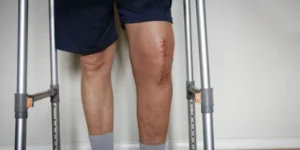

Knee pain caused by arthritis, injury, or joint degeneration can gradually affect every part of your daily life—from walking and climbing stairs to enjoying simple daily activities with your family. When medications, physiotherapy, and injections no longer provide relief, knee replacement surgery may become the most effective treatment option.
However, many patients are surprised to learn that there isn’t just one type of knee replacement surgery. Advanced orthopaedics offers several procedures designed to match the severity of joint damage, age, activity level, and overall health of each patient.
This complete guide explains the different types of knee replacement surgery, how each procedure works, who it is suitable for, and what factors your orthopedic surgeon considers before recommending the best option.
Understanding Knee Replacement Surgery and Its Types
Knee replacement surgery — also called knee arthroplasty — involves removing affected, damaged or worn cartilage and bone from the knee joint and replacing it with an artificial implant. While the goal is always the same — restoring pain-free movement — the surgical approach varies significantly based on how much of the knee is affected.
Knowing the different types of knee replacement surgery matters because choosing the right procedure directly impacts your recovery time, long-term mobility, and overall surgical outcome.
A Guide to All Types of Knee Replacements
Before diving into specifics, here is a quick overview of the main categories patients typically encounter:
- Total Knee Replacement
- Partial Knee Replacement
- Bilateral Knee Replacement
- Revision Knee Replacement
- Robotic-Assisted Knee Replacement
- Minimally Invasive Knee Replacement
Each type of knee replacement addresses a different stage and pattern of joint damage, which is why an accurate diagnosis always precedes the choice of procedure.
Types of Knee Replacement Surgery
Total Knee Replacement (TKR)
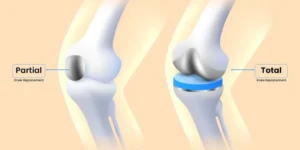
Total knee replacement is the most commonly performed procedure, replacing the entire knee joint surface when arthritis or damage affects multiple compartments of the knee.
Best Suited For:
- Patients with widespread cartilage damage across the knee
- Severe arthritis causing constant pain and stiffness
What to Expect:
- Removal of damaged bone and cartilage from all three knee compartments
- Implantation of a full prosthetic joint using metal and plastic components
Partial Knee Replacement (Unicompartmental)
This type of knee replacement surgery treats only the affected section of the knee, leaving healthy bone and ligaments intact.
Best Suited For:
- Patients with arthritis limited to one compartment of the knee
- Younger, more active patients seeking faster recovery
What to Expect:
- A smaller incision compared to total knee replacement
- Preservation of natural knee ligaments often results in more natural movement post-surgery
Bilateral Knee Replacement
Bilateral knee replacement involves replacing both knees, either during the same surgery (simultaneous) or in two separate procedures (staged).
Best Suited For:
- Patients with significant arthritis or damage in both knees
- Individuals seeking to avoid multiple separate recovery periods
What to Expect:
- Longer surgical time if performed simultaneously
- A single, combined rehabilitation period, when done together
Revision Knee Replacement
Revision knee replacement is performed when a previous knee implant has worn out, loosened, or failed, requiring removal and replacement.
Best Suited For:
- Patients whose original implant has degraded over time (typically after 15-20 years)
- Cases involving infection, instability, or implant failure
What to Expect:
- A more complex surgery due to existing scar tissue and bone changes
- Customised implants designed to accommodate prior surgical changes
What About Robotic Knee Replacement?
Robotic knee replacement represents one of the latest developments in knee replacement technology, using robotic-assisted precision to guide implant placement.
This approach allows surgeons to create a highly personalised surgical plan based on each patient’s unique anatomy, captured through pre-operative imaging. The robotic arm assists the surgeon in making precise bone cuts, improving implant alignment and potentially extending implant lifespan.
Key benefits include:
- Greater surgical accuracy and implant positioning
- Reduced soft tissue damage during the procedure
- Potentially faster recovery for eligible candidates
While robotic-assisted procedures often come with a higher cost, many patients find the long-term benefits in alignment and function worthwhile — particularly for complex cases.
Types of Replacement Knee Joints
The implants used during knee replacement surgery also vary, and understanding these options helps clarify what your surgeon may recommend:
- Fixed-Bearing Implants — the plastic insert is fixed in place, offering stability for most patients
- Mobile-Bearing Implants — the insert can rotate slightly, mimicking more natural knee movement
- Cemented Implants — secured using surgical cement, providing immediate stability
- Cementless (Press-Fit) Implants — designed to allow natural bone growth into the implant over time
Your surgeon will select the most appropriate joint type based on bone quality, activity level, and age.
What to Expect in a Knee Replacement Surgery?
Most knee replacement procedures follow a similar general structure, regardless of type:
- Pre-surgical evaluation — imaging, blood tests, and overall health assessment
- Anaesthesia administration — typically general or spinal anaesthesia
- Surgical procedure — duration ranges from 1 to 2 hours, depending on complexity
- Hospital stay — usually 1 to 3 days, depending on recovery progress
- Physical therapy initiation — often begins within 24 hours to support mobility
Recovery timelines vary by procedure type, with partial and robotic-assisted replacements generally allowing faster return to daily activities.
Cost of Each Knee Replacement Surgery
Costs vary significantly depending on the type of procedure, hospital, implant materials, and geographic location. While exact figures depend on your specific case, general cost considerations include:
- Total Knee Replacement — typically the most comprehensive, reflecting full joint replacement costs
- Partial Knee Replacement — often less expensive due to smaller implant size and shorter surgery
- Robotic-Assisted Procedures — generally higher cost due to modern technology and precision equipment
- Revision Surgery — usually the most expensive due to surgical complexity
Always request a detailed cost breakdown from your hospital, including implant charges, surgeon fees, and post-operative care.
Questions to Ask the Doctor Before a Knee Replacement Surgery
- Which type of knee replacement surgery is most suitable for my condition?
- Am I a candidate for robotic-assisted or minimally invasive options?
- What is the expected recovery timeline for my specific procedure?
- What are the risks and potential complications?
- How long is the implant expected to last?
Asking these questions ensures you fully understand your treatment plan and feel confident in your surgical decision.
Who May Not Qualify for a Knee Replacement Surgery?
Not every patient is an immediate candidate for knee replacement. Factors that may delay or rule out surgery include:
- Active infections in the knee or elsewhere in the body
- Poorly controlled diabetes or cardiovascular conditions
- Severe obesity without prior weight management
- Insufficient bone density to support an implant
- Younger patients who may benefit more from conservative treatment first
A thorough pre-surgical evaluation helps determine candidacy and whether alternative treatments should be explored first.
Success Factors in Types of Knee Replacement
Several factors influence the long-term success of any knee replacement procedure:
- Surgeon’s experience and precision, particularly with robotic-assisted techniques
- Patient adherence to post-surgical physical therapy
- Overall health and activity level before and after surgery
- Implant type and quality
- Realistic expectations aligned with the specific procedure chosen
Which Procedure Is Right for You?
Choosing among the many types of knee replacement surgery depends on a combination of factors unique to your condition:
- Extent of damage — single compartment versus full joint involvement
- Age and activity level — younger, active patients may benefit from partial or robotic options
- Bone quality — influences cemented versus cementless implant choice
- Overall health — determines candidacy for more complex procedures like bilateral replacement
The only way to determine the right procedure for your specific situation is through a detailed consultation with an experienced orthopedic surgeon who can evaluate your imaging, symptoms, and lifestyle goals.
Frequently Asked Questions
1. What is the best type of knee replacement?
The best type depends on individual factors like damage extent and activity level. Total knee replacement is well-suited to widespread arthritis, while partial replacement works well for limited, single-compartment damage in active patients.
2. What is the newest method for knee replacement?
Robotic-assisted knee replacement is currently among the newest and most advanced methods, offering improved accuracy in implant placement through computer-guided surgical planning.
3. How many hours is a full knee replacement surgery?
Total knee replacement surgery typically takes 1 to 2 hours, though this can vary based on case complexity and whether robotic assistance is used.
4. What is the most successful knee replacement?
Total knee replacement has the longest track record of success for widespread arthritis, while robotic-assisted procedures show promising long-term outcomes due to improved implant alignment.
5. Which knee replacement lasts the longest?
With proper care, modern knee implants — particularly those placed with robotic precision — can last 20 years or more, though individual results vary based on activity level and implant type.
Conclusion
Understanding the different types of knee replacement surgery empowers you to have more informed conversations with your orthopedic team and set realistic expectations for recovery. Whether you need a total, partial, or robotic-assisted procedure, the right choice depends on your unique anatomy and health goals.
If you are exploring knee replacement options, Prime Ortho — Best Orthopedic Hospital in East Delhi — offers comprehensive evaluation and access to advanced surgical techniques, including robotic-assisted knee replacement, to help you find the most suitable path to pain-free mobility.

Dr.Shekhar Srivastav
Robotic Joint Replacement Surgeon | Senior Orthopaedic Surgeon | Knee, Shoulder & Sport Injury Specialist