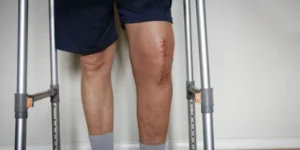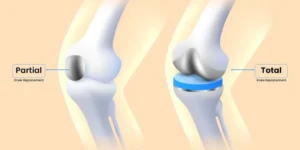

Knee replacement surgery has helped millions of people regain mobility and live with less pain. While most patients focus on the procedure itself, one crucial factor that often goes unnoticed is the knee replacement material used in the implant. The material can affect the implant’s durability, comfort, performance, and long-term success.
Today, knee implants are made from advanced materials such as cobalt-chromium, titanium, polyethylene, and ceramic-coated components. In this complete guide, we’ll explain the different types of knee replacement materials, their benefits, costs, lifespan, and how to choose the best option for your needs.
What Is Knee Replacement Material?
Knee replacement material refers to the combination of metals, plastics, and ceramics used to manufacture the artificial components that replace the damaged surfaces of a knee joint during arthroplasty surgery.
A total knee replacement has three main components:
- Femoral component — the cap that fits over the end of the thigh bone (femur)
- Tibial component — the platform fixed to the top of the shin bone (tibia)
- Patellar component — the surface placed on the back of the kneecap (patella)
Each component can be made from different materials — and the combination chosen for your surgery directly affects implant durability, joint feel, allergy risk, and how long your knee replacement lasts.
Are All Knee Replacements the Same?
No — and this is one of the most common misunderstandings patients have before surgery. Knee replacement implants differ significantly in:
- The specific metals used for the femoral and tibial components
- The type and quality of plastic (polyethylene) used as the bearing surface
- Whether the design is cemented or cementless (press-fit)
- Whether the bearing is fixed or mobile
- The brand, which directly influences long-term outcome data and implant quality
Choosing the right combination of these variables — based on your age, activity level, body weight, and bone quality — is as important as the surgical technique itself.
Types of Knee Replacement Materials
Modern knee replacement implants use three primary material groups — each with specific advantages depending on the patient’s age, activity level, and medical history.
Cobalt-Chromium Alloy (CoCr): The most widely used material worldwide, with over 50 years of clinical data. It forms the standard femoral component in total knee replacement.
- Extremely hard, wear-resistant, and highly polished to reduce friction
- Compatible with most patients and backed by the most extensive long-term evidence
A very small number of patients have cobalt or chromium sensitivity — metal ion testing is available before surgery if you are concerned.
Titanium Alloy: Primarily used for the tibial base component anchored into the shin bone, and as an alternative for patients with metal sensitivities.
- Exceptionally biocompatible with porous surface options that allow bone to grow directly into the implant
- Lightweight, MRI-friendly, and ideal for cementless fixation in younger patients
Oxidised Zirconium (Oxinium): The most advanced metal-based material currently available — a zirconium alloy with a ceramic-like bearing surface that significantly reduces wear.
- Reduces polyethylene wear by up to 50% in laboratory studies and contains no nickel
- Best suited for younger or more active patients and those with metal sensitivity
Ceramic (Alumina / Zirconia): The metal-free option for patients with confirmed metal allergies who cannot tolerate any metal-bearing implant. Ceramic offers zero metal content and excellent biocompatibility, though it is more brittle than metal under impact. For most patients needing a reduced-metal option, oxinium is typically preferred over pure ceramic.
The Science Behind the Best Knee Replacement Materials
What makes a knee replacement material “best” is not a single property — it is a combination of mechanical performance characteristics that work together:
Hardness — the material must resist scratching and surface damage from daily use over decades.
Wear resistance — the bearing surfaces must produce minimal debris particles over millions of movement cycles.
Biocompatibility — the material must not trigger immune or allergic responses in the surrounding tissues.
Fatigue strength — the material must resist cracking or fracture under the cyclical loading of walking, stair climbing, and daily activity.
Osseointegration — for cementless components, the material must allow bone cells to grow into and bond with the implant surface over time.
No single material excels at all five simultaneously — which is why advanced knee replacements use a combination of materials, each chosen for its specific role in the implant system.
Why Material Choice Matters — More Than Most Patients Realise
The implant material directly determines:
- How long your knee lasts — highly crosslinked polyethylene and oxinium significantly extend implant survival compared to standard materials
- Your allergy and immune response risk — patients with metal sensitivities who receive standard cobalt-chromium implants may develop adverse local tissue reactions
- MRI compatibility — if you need imaging after surgery, titanium produces far less artefact than cobalt-chromium, giving clearer images
- Revision complexity — longer-lasting materials mean a lower likelihood of needing revision surgery — which is significantly more complex than primary knee replacement
For a 55-year-old active patient, the difference between standard and premium materials can mean the difference between one knee replacement for life versus requiring revision surgery in 15 years.
Material Comparison Table for Indian Patients — with Cost
| Material | Used For | Durability | Allergy Risk | Estimated Cost (India) |
| Cobalt-Chromium (CoCr) | Femoral component | High | Low-moderate | ₹40,000 – ₹80,000 per knee |
| Titanium Alloy | Tibial base, cementless | High | Very low | ₹50,000 – ₹1,00,000 per knee |
| Oxidised Zirconium (Oxinium) | Femoral component | Very High | Negligible | ₹1,50,000 – ₹3,00,000 per knee |
| Ceramic | Full component | High (brittle) | None | ₹2,00,000 – ₹4,00,000 per knee |
| Standard Polyethylene | Tibial insert | Moderate | None | ₹20,000 – ₹40,000 |
| Highly Crosslinked PE (HXLPE) | Tibial insert | Very High | None | ₹40,000 – ₹80,000 |
| Vitamin E PE | Tibial insert | Highest | None | ₹60,000 – ₹1,20,000 |
Note: These are approximate component costs. Total knee replacement costs include surgeon fees, hospital stay, and anaesthesia — varying significantly by hospital category, city, and whether robotic assistance is used.
Knee Replacement Material Cost in India — What Drives the Price Difference?
The cost difference between knee replacement materials in India is primarily driven by:
Implant brand and manufacturing: Indian-manufactured implants are significantly more affordable than premium imported brands. Premium brands carry more extensive long-term outcome data — which matters most for younger patients.
Material specification: Standard cobalt-chromium with standard polyethylene sits at the most affordable end. Oxinium femoral components with Vitamin E-stabilised polyethylene sit at the premium end — with the cost difference representing potentially 5-10 additional years of implant life.
Cemented vs cementless: Cementless implants — which rely on bone integration rather than bone cement — are typically more expensive than cemented designs, but may offer better long-term fixation for younger patients with good bone quality.
Insurance coverage: Most Indian health insurance policies cover knee replacement surgery — but many have implant cost sub-limits. Always verify your specific policy’s implant coverage before choosing your material.
What Is the Most Common Knee Replacement Combination Used?
The most widely used combination worldwide — and in most Indian hospitals — is:
Cobalt-chromium femoral component + Highly Crosslinked Polyethylene tibial insert + Titanium tibial base
This combination delivers high durability, extensive clinical evidence, and a balance of cost and performance that suits the majority of patients. For younger or more active patients — or those with metal sensitivities — upgrading to Oxinium + Vitamin E polyethylene is increasingly recommended by high-volume joint replacement surgeons.
What Is the Longest-Lasting Knee Replacement?
Based on current clinical evidence, the longest-lasting knee replacement combination is:
Oxidised Zirconium (Oxinium) femoral component + Vitamin E-stabilised polyethylene tibial insert + Cementless titanium tibial base
This combination addresses every major cause of long-term implant failure:
- Oxinium’s ceramic-like surface dramatically reduces polyethylene wear
- Vitamin E polyethylene resists oxidative degradation over decades
- Cementless titanium fixation allows bone integration that can outlast cement fixation
Clinical registry data shows implant survival rates above 90% at 15-20 years with premium material combinations — compared to 80-85% at the same timeframe for standard material combinations.
How to Choose the Best Knee Replacement Material for You
The right material depends on your specific situation — not a universal answer:
Under 65 and active: Oxinium + Vitamin E polyethylene for maximum longevity — the additional cost is justified by significantly reduced revision risk over your lifetime
Over 70 with moderate activity: Cobalt-chromium + HXLPE delivers excellent outcomes at lower cost — premium materials are less critical at lower activity levels
Known metal allergy: Oxinium (nickel-free) or ceramic components are important — metal ion testing before surgery can also identify sensitivity in patients without known allergies
Good bone quality (younger patients): Cementless titanium fixation is preferred — bone integration strengthens fixation over time
Reduced bone density (older patients or osteoporosis): Cemented fixation provides immediate mechanical stability regardless of bone quality
Frequently Asked Questions
1. What is the best material for a knee replacement?
For most patients, cobalt-chromium with highly crosslinked polyethylene offers the best balance of durability and cost. For younger or active patients, Oxinium with Vitamin E polyethylene delivers the lowest wear rates and longest implant survival.
2. What are the new materials for knee replacement?
The most significant advances are Vitamin E-stabilised polyethylene — projected to last 25+ years — and improved porous titanium coatings that produce stronger bone integration in cementless fixation.
3. What kind of metal is used in knee replacement?
Cobalt-chromium alloy is most commonly used for the femoral component, and titanium for the tibial base. Oxidised zirconium (Oxinium) is a premium alternative with a ceramic-like surface that dramatically reduces plastic bearing wear.
4. Is titanium the best knee replacement material?
Titanium is excellent for the tibial base — especially in cementless designs. For the femoral bearing surface, cobalt-chromium or oxinium is preferred as they are harder and more wear-resistant.
5. What type of knee replacement is most successful?
Total knee replacement using a cobalt-chromium or oxinium femoral component, highly crosslinked or Vitamin E polyethylene insert, and titanium tibial base — performed by a high-volume surgeon, ideally with robotic assistance — consistently produces the best long-term outcomes.
Conclusion
Knee replacement material is one of the most crucial decisions in your surgery — directly affecting how long your replacement lasts, how natural it feels, and how well it suits your lifestyle. The right combination of metal, bearing surface, and fixation method is not one-size-fits-all.
Prime Ortho — Best Orthopedic Hospital in East Delhi — uses only premium, internationally verified implant systems with complete material transparency. Every patient receives a clear, personalised discussion of material options, long-term implications, and cost before any decision is made.

Dr.Shekhar Srivastav
Robotic Joint Replacement Surgeon | Senior Orthopaedic Surgeon | Knee, Shoulder & Sport Injury Specialist