
Sudden hip pain after an accident can make even the smallest daily movement frightening. If your leg looks unusual or you cannot stand, a dislocated hip may be the cause.
This injury happens when the ball of the thighbone leaves its socket. It needs urgent medical attention because nearby nerves, blood vessels, and other tissues may also be damaged.
If you suspect a dislocated hip, call your local emergency number. Do not walk, straighten the leg, or attempt to push the joint back into place.
What Is Hip Dislocation?
Your hip is a ball-and-socket joint. The rounded top of the thighbone, called the femoral head, fits inside the acetabulum, a socket in the pelvis.
Strong ligaments and surrounding muscles help keep these bones aligned. Hip dislocation occurs when the ball moves completely outside the socket.
A partial displacement is called subluxation. A hip fracture, by comparison, means a bone has broken. Dislocation and fracture can occur together, so imaging is important.
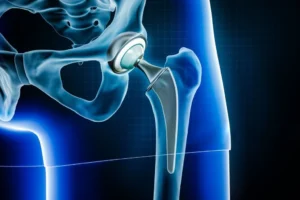
A dislocated hip can involve either your natural joint or an artificial hip replacement.
What Are the Common Symptoms of a Dislocated Hip?
Symptoms usually appear suddenly after an injury. However, a hip replacement may dislocate during a lower-force movement.
| Symptom | What you may notice |
| Severe hip or groin pain | Intense pain that makes movement difficult |
| Inability to bear weight | Standing or walking becomes difficult or impossible |
| Restricted movement | The leg feels stuck or cannot move normally |
| Changed leg position | The leg appears shorter or turns inward or outward |
| Swelling or bruising | Tenderness and visible swelling around the hip |
| Muscle spasms | Painful tightening around the injured joint |
| Numbness | Reduced feeling in the foot or ankle |
A dislocated hip cannot be diagnosed from appearance alone. A fracture or another serious injury can cause similar symptoms. Do not repeatedly move the leg to check whether it is dislocated.
5 Common Causes of Hip Dislocation
1. Road Traffic Accidents
The most common cause. In a car crash, the knee strikes the dashboard, and the force travels up the thigh bone, driving the hip out of its socket.
- Typically a posterior dislocation
- Often with fractures of the pelvis or socket
- Seat belts and airbags reduce the risk
2. Falls From Height
A hard landing on the feet or side can force the ball out of the socket.
- More common in workers, climbers, and older adults
- May cause hip fracture alongside dislocation
- Falls on the stairs can be enough in fragile bones
3. Sports Injuries
High-impact and contact sports can place sudden force on the hip.
- Football, rugby, skiing, and martial arts
- Usually involves a direct blow or a twisting fall
- Often seen in young, active people
4. Dislocation After Hip Replacement
An artificial hip can dislocate if the joint is moved into a risky position, particularly in the first 3 months before the tissues heal.
- Bending the hip beyond 90 degrees, crossing the legs, or twisting inward
- More common with certain surgical approaches
- Following hip precautions greatly lowers the risk
5. Congenital Hip Dysplasia and Other Conditions
Some people are born with a shallow socket, and others have conditions that weaken the joint.
- Developmental dysplasia of the hip (DDH) in infants
- Loose ligaments or connective tissue disorders
- Previous hip surgery or injury
What Are the Different Types of Hip Dislocation?
| Type | What Happens | How Common |
| Posterior dislocation | Ball slips out toward the back of the socket | Most common (about 90% of traumatic cases) |
| Anterior dislocation | Ball slips out toward the front of the socket | Less common |
| Central dislocation | Ball is pushed through a fractured socket into the pelvis | Rare, usually severe injury |
| Prosthetic dislocation | The artificial ball comes out after a hip replacement | Mostly in the first months after surgery |
| Congenital (DDH) | Hip socket is shallow from birth, and the joint is unstable or dislocated | Found in infants |
How Is a Dislocated Hip Diagnosed?
Doctors examine your leg position and assess nerve function and circulation. After a major accident, they also look for injuries elsewhere in the body.
The main investigations include:
Clinical examination:
- Checking the position and length of the leg
- Testing circulation, sensation, and movement in the foot, as the sciatic nerve can be injured
- Looking for other injuries, particularly of the knee, pelvis, and spine
Imaging:
- X-ray: Confirms the dislocation and its direction
- CT scan: Looks for small bone fragments and fractures of the socket or femoral head, usually after the hip is put back
- MRI: Used later if needed to check cartilage, labrum, and blood supply to the femoral head
There is no safe self-test for a dislocated hip. A visibly deformed, painful hip that cannot move needs emergency care.
What Is the Treatment for a Dislocated Hip?
Emergency Repositioning of the Joint
Treatment usually begins with reduction, which means returning the ball to its socket.
Doctors provide appropriate pain relief and sedation or anaesthesia. Many injuries can be treated using closed reduction, without making an incision.
For a traumatic dislocation of a natural hip, reduction is performed as soon as possible, preferably within six hours. This does not mean it is safe to wait six hours before seeking help.
Care After the Hip Is Repositioned
The team checks alignment and joint stability and arranges further imaging when needed.
Treatment for a dislocated hip may then include prescribed pain relief, walking aids, temporary movement restrictions and physiotherapy. Follow your specific weight-bearing instructions rather than testing how much weight the leg can tolerate.
When Is Surgery Required for a Dislocated Hip?
Many simple dislocations are treated without surgery once the hip is reduced. Surgery is needed when:
- Bone fragments or damaged tissue block reduction.
- Associated fractures need repair.
- The joint remains unstable after repositioning.
- Significant surrounding damage requires treatment.
- A hip replacement repeatedly dislocates or needs revision.
An operation may involve restoring alignment, fixing fractures, or addressing implant-related problems. Not every dislocated hip requires surgery; the decision depends on the injury and the stability of the joint.
How Long Does It Take to Recover from a Dislocated Hip?
Recovery depends on the severity of the injury and whether there are fractures or nerve damage.
| Stage | Typical Timeframe | What to Expect |
| Immediately after reduction | Days 1-3 | Pain control, scan checks, walking with support |
| Protected phase | Weeks 1-6 | Crutches, limited weight bearing, avoiding risky positions |
| Strengthening phase | Weeks 6-12 | Physiotherapy, gradual return to walking and daily tasks |
| Return to activity | 3-6 months | Return to work and light sport, as cleared by the doctor |
| Complex injuries | 6-12 months | Fracture-dislocations and surgery take longer |
Following the physiotherapy plan and hip precautions closely is the best way to protect the joint during recovery.
What Complications Can a Dislocated Hip Cause?
A dislocated hip can do lasting damage if not treated promptly.
- Avascular necrosis: Damage to the blood supply can cause bone tissue in the hip to die.
- Nerve injury: This may cause numbness, weakness, or difficulty moving the foot.
- Post-traumatic arthritis: Cartilage damage can lead to later pain and stiffness.
- Repeated dislocation: Injured supporting tissues can leave the joint less stable.
A dislocated hip does not always cause permanent damage. Prompt treatment and follow-up help address risks, although they cannot eliminate every complication.
How Can You Help Prevent Hip Dislocation?
Not every injury is preventable, but practical precautions can reduce risk:
- Wear a seat belt when travelling.
- Follow safety procedures when working at height.
- After treatment, complete the rehabilitation programme prescribed for you.
- Use walking aids until your treating team advises otherwise.
- Follow any movement restrictions after hip surgery.
Some patients need to avoid deep bending, crossing their legs or twisting. These precautions are individual, not universal.
When Should You See an Orthopaedic Specialist?
A suspected new dislocation needs emergency assessment immediately, rather than a routine clinic appointment. This also applies if sudden pain and restricted movement develop after hip replacement.
After emergency treatment, orthopaedic follow-up helps monitor healing, review walking restrictions and guide rehabilitation.
Seek urgent reassessment if severe pain returns or the leg becomes difficult to move again. Do not assume a previously treated dislocated hip is simply sore from exercise.
Frequently Asked Questions
Can You Still Walk With a Dislocated Hip?
A complete dislocation usually prevents normal walking. Some partial dislocations allow movement, but this does not make them harmless. Do not try walking to rule out a serious injury.
How Do You Know if Your Hip Has Dislocated?
Severe pain, a shortened or rotated leg, and difficulty moving are warning signs. However, similar symptoms occur with fractures. An examination and imaging are needed to identify the injury.
How Do Doctors Fix a Dislocated Hip?
Doctors reposition the joint using reduction, with appropriate sedation or anaesthesia. Surgery may only be required if reduction is unsuccessful or associated injuries need repair. Never attempt this procedure yourself.
How Serious Is a Hip Dislocation?
It is a medical emergency. A dislocated hip can damage nearby tissues and interrupt blood supply to the femoral head. Early treatment helps reduce the risk of lasting complications.
How Do You Test for a Dislocated Hip?
There is no reliable home test. Doctors assess leg position, sensation, and circulation, then use imaging to confirm the diagnosis. Stretching or twisting the hip to test it is unsafe.
How Painful Is a Dislocated Hip Replacement?
It commonly causes sudden, intense pain and difficulty moving or standing. The leg may appear shorter or rotated. Seek emergency care even if the pain seems less severe than expected.
Can You Realign Your Hips Yourself?
Do not try to realign a suspected dislocation using stretches, pulling, or manipulation. Feeling that your hips are uneven does not prove dislocation either; constant symptoms need a professional assessment.
What Should You Avoid After a Hip Dislocation?
Avoid unapproved weight-bearing, forceful stretching, and returning to sport before clearance. Follow your own movement restrictions. Some patients need precautions around bending or twisting, while others have different rehabilitation instructions.
Can Hip Dislocation Cause Permanent Damage?
Yes, nerve injury, bone damage, or arthritis can sometimes have lasting effects. However, outcomes vary. Prompt treatment, appropriate rehabilitation, and follow-up give your care team the opportunity to identify problems early.
Can a Dislocated Hip Go Back in by Itself?
Do not wait for it to return to position. A suspected dislocation needs urgent assessment. Even if pain improves or the joint seems to move back, associated injuries may still require treatment.
Conclusion
A dislocated hip is a serious orthopaedic injury that requires immediate medical attention. Prompt and timely treatment, timely hip reduction, following a structured rehabilitation programme, and attending regular follow-up appointments are essential for recovery and for monitoring potential complications such as avascular necrosis (AVN) and post-traumatic arthritis.
Prime Ortho – Best Orthopaedic Hospital in East Delhi provides specialised evaluation and treatment for hip injuries and joint conditions, including hip arthroscopy, fracture management, and hip replacement surgery. Our orthopaedic team helps patients understand their diagnosis, imaging results, and available treatment options so they can make informed decisions about their care.