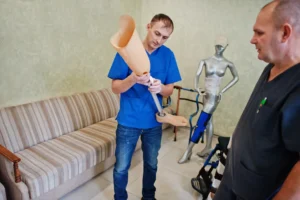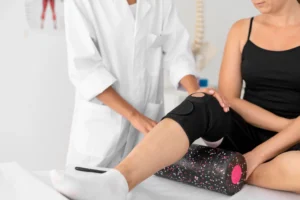
Knee replacement surgery can help reduce chronic pain and improve mobility, but proper recovery is equally crucial for long-term success. Many patients unknowingly make mistakes during recovery that may delay healing, increase discomfort, or affect knee movement.
Understanding the Top 5 Mistakes After Knee Replacement Surgery can help patients recover more safely and avoid complications. In this complete guide, we’ll explain common recovery mistakes, exercises to avoid, recovery tips, and warning signs that need medical attention.
Why Recovery Decisions Matter as Much as the Surgery Itself
Knee replacement surgery has a 90-95% success rate — but that success is not guaranteed by the operation alone. It is built day by day during the recovery period. What you do — and what you avoid — in the weeks and months after surgery directly determines your final range of motion, strength, pain levels, and implant longevity.
The most common reason patients do not achieve the outcome they hoped for is not a surgical complication — it is a recovery mistake that was entirely preventable. Understanding the top 5 mistakes after knee replacement surgery puts that outcome back in your control.
Top 5 Mistakes After Knee Replacement Surgery
Mistake 1 — Skipping or Stopping Physiotherapy Too Early
This is the single most damaging mistake patients make after knee replacement — and the most common. Physiotherapy feels uncomfortable, rest feels more logical than movement, but stopping early allows scar tissue to form inside the joint. Once that tightens, regaining range of motion becomes significantly harder and sometimes requires a second procedure.
What not to do:
- Stop physiotherapy because exercises feel uncomfortable
- Assume walking alone is enough rehabilitation
What to do instead:
- Begin physiotherapy within 24 hours of surgery — even in hospital
- Attend every prescribed session for the first 12 weeks without exception
The target is 90 degrees of knee bend within 3 weeks and 110–120 degrees within 6–8 weeks. These milestones require consistent physiotherapy — not rest.
Mistake 2 — Doing Too Much Too Soon
The opposite extreme is equally damaging. Patients encouraged by early progress sometimes push far beyond what the healing knee can handle — walking excessive distances, climbing stairs repeatedly, or returning to physical work too soon. The first 6 weeks are a crucial healing window, and excessive activity increases swelling, worsens pain, and can stress the implant before it has fully secured.
What not to do:
- Walk long distances before your surgeon has cleared it
- Return to physically demanding work before 6–8 weeks
What to do instead:
- Follow your surgeon’s weight-bearing instructions precisely at every stage
- Plan activity in short bursts — walk, rest, elevate, repeat
- Use walking aids for as long as your surgeon recommends
Mistake 3 — Neglecting Blood Clot Prevention
Deep vein thrombosis (DVT) is one of the most serious complications after knee replacement. Many patients become complacent about blood thinners and movement routines once they return home — but stopping medication early or staying still for too long can lead to life-threatening clots.
Warning signs requiring immediate attention:
- Sudden deep cramping or pain in the calf or thigh
- Shortness of breath or chest pain — the clot may have moved to the lungs
What to do:
- Take prescribed blood thinners exactly as directed — never skip doses
- Do ankle pumping exercises every hour when awake
- Walk short distances regularly rather than sitting or lying for hours
Never stop prescribed blood thinners without your surgeon’s explicit instruction.
Mistake 4 — Using the Wrong Home Setup and Furniture
The home environment after knee replacement has a bigger impact on recovery than most patients expect. Chairs that are too low, toilets without raised seats, and floor-level hazards all create safety risks and unnecessary strain on the healing knee.
What to avoid at home:
- Getting up from low sofas that require deep knee bending
- Kneeling directly on the operated knee in the first 3–6 months
Home setup checklist before discharge:
- Raise chair height so hips sit higher than knees when seated
- Install a raised toilet seat to prevent excessive knee bending
- Remove rugs, cables, and floor-level obstacles that create fall risk
- Place frequently used items at waist height to avoid bending down
Mistake 5 — Ignoring Swelling and Not Elevating the Leg
Swelling after knee replacement is normal — but unmanaged swelling slows recovery, increases pain, and limits the range of motion you can achieve in physiotherapy. Many patients wait it out rather than using the simple daily habits that reduce it significantly.
What not to do:
- Sit with the leg hanging down for prolonged periods
- Skip icing because the knee feels slightly better
How to manage swelling effectively:
- Elevate the leg above heart level for 20–30 minutes, 3–4 times daily
- Apply ice wrapped in a cloth for 15–20 minutes after exercise — never directly on skin
- Wear your compression stockings for as long as instructed
Knee Replacement Exercises to Avoid — A Quick Reference
Beyond the mistakes above, certain specific movements and exercises should be avoided post-knee replacement surgery to protect the implant and the healing tissues:
In the first 6 weeks — avoid entirely:
- Deep squats or lunges
- High-impact activities — running, jumping, step aerobics
- Pivoting or twisting on the operated leg
- Kneeling directly on the operated knee
Long-term permanent restrictions:
- Running and jogging — excessive impact accelerates implant wear
- High-impact sports — football, basketball, contact sports
- Any activity that causes sharp or sudden knee pain without explanation
Low-impact activities — walking, swimming, cycling, yoga, and golf — are actively encouraged after full recovery and help maintain the muscle strength that protects implant longevity.
What Should You Be Doing 6 Weeks After Knee Replacement?
At 6 weeks, most patients are in the active recovery phase — and this is where outcomes can diverge significantly.
At 6 weeks, you should ideally be:
- Walking without a frame — using a cane if needed for balance
- Achieving at least 90 degrees of knee bend
- Returning to desk-based work in most cases
- Continuing formal physiotherapy 2–3 times per week
If you have less than 90 degrees of bend despite consistent effort, significant stiffness that isn’t improving, or signs of infection — increasing warmth, redness, or fever — contact your surgeon immediately. These are not issues to wait out.
Our Top Tips for a Quick Recovery After Knee Replacement
Building on avoiding the 5 mistakes above, these additional best practices accelerate recovery and improve final outcomes:
- Start physiotherapy before surgery — prehabilitation (building quadriceps strength before the operation) consistently produces better and faster post-operative recovery
- Keep all follow-up appointments — your surgeon tracks healing milestones and clears each new activity stage based on examination and imaging
- Eat a protein-rich diet — protein directly supports tissue repair and muscle rebuilding throughout recovery
- Maintain a healthy weight — every extra kilogram adds compressive load to the healing implant
- Sleep with a pillow under the calf — not under the knee itself, which increases flexion contracture risk
- Track your milestones — note your knee bend angle weekly — progress should be visible every 1-2 weeks in the early period
When to Call Your Doctor Immediately
Some symptoms after knee replacement are urgent — and must not be waited out or monitored at home:
Call your doctor the same day or go to the emergency if you experience:
- Fever above 38.5°C (101.3 F) or increasing redness, warmth, or discharge from the wound
- Sudden severe increase in knee pain not related to activity
- Calf pain or swelling that suggests DVT, or shortness of breath (possible pulmonary embolism — emergency)
- The knee feels unstable, gives way, or has a new clicking or grinding sensation
These symptoms do not always mean something serious — but they always require immediate professional evaluation, not home management.
Best Practices to Follow Post-Surgery — Summary Checklist
| Phase | Best Practice |
| Day 1-7 | Begin physiotherapy, ankle pumps every hour, take blood thinners as prescribed |
| Week 2-4 | Progress walking distance gradually, ice after exercise, attend every physiotherapy session |
| Week 4-8 | Achieve 90+ degree bend, start driving when cleared, reduce walking aid use |
| Week 8-12 | Active physiotherapy, increase daily walking, light independent daily activities |
| 3-6 months | Low-impact exercise, follow-up imaging, full independence for most daily tasks |
| 6-12 months | Final strength and range of motion achieved, long-term activity guidelines followed |
Frequently Asked Questions
1. What is the biggest complaint after knee replacement?
Constant stiffness, slow strength recovery, and residual swelling in the first 3–6 months — all significantly reduced when physiotherapy is started early and maintained consistently.
2. What can you never do again after a knee replacement?
High-impact activities like running and contact sports should be avoided permanently. In the first 3–6 months, kneeling on the operated knee and deep squatting must also be avoided.
3. How do I know if something is wrong with my knee replacement?
Warning signs include increasing redness, warmth, fever, sudden pain, calf swelling suggesting DVT, the knee giving way, or a new clicking sensation — any of these need immediate medical review.
4. What is the best position to sit after a knee replacement?
Sit in a firm chair with hips slightly higher than knees, keep the leg elevated when resting, and avoid crossing legs or tucking the foot under the body for the first 6–8 weeks.
5. How far should I be walking 4 weeks after knee replacement?
Most patients walk 10–20 minutes, 3–4 times daily — the goal is consistent moderate activity rather than one long walk that causes excessive swelling and fatigue.
Conclusion
The outcome of knee replacement surgery is not determined in the operating room alone — it is determined by the quality of recovery that follows. Avoiding these top 5 mistakes after knee replacement surgery, following your physiotherapy programme consistently, and seeking prompt medical advice when anything changes are the three most important actions any patient can take.
Prime Ortho — Best Orthopedic Hospital in East Delhi — offers advanced knee replacement surgery and comprehensive post-operative recovery guidance under the expert care of Dr. Shekhar Srivastav. Our dedicated team supports every patient from surgery through to full recovery — ensuring the best possible long-term outcome for every new knee.

Dr.Shekhar Srivastav
Robotic Joint Replacement Surgeon | Senior Orthopaedic Surgeon | Knee, Shoulder & Sport Injury Specialist