
Chronic knee pain can make simple daily activities like walking, climbing stairs, or even standing extremely difficult and painful. For patients with advanced arthritis, robotic total knee replacement surgery offers an advanced, highly accurate solution that improves mobility and reduces pain.
Unlike traditional methods, robotic-assisted procedures use modern technology to deliver better accuracy, faster recovery, and improved long-term outcomes. In this complete guide, you’ll understand everything — from procedure and benefits to cost and recovery.
What Is Robotic Total Knee Replacement Surgery?
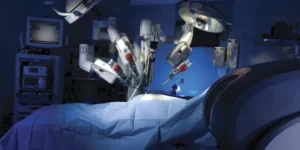
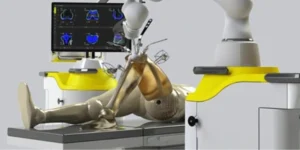
Robotic total knee replacement — also called robotic-assisted total knee arthroplasty — is an advanced knee replacement where a computer-guided robotic arm assists the surgeon with precision that the human hand alone cannot consistently achieve. The surgeon stays fully in control at every step — the robot simply makes each movement more precise and more personalised.
Before surgery, a CT scan creates a 3D digital model of the patient’s knee. The surgeon uses this to plan every bone cut in advance, and during surgery, the robotic system executes that plan with sub-millimetre accuracy — alerting the surgeon instantly if anything moves outside the planned zone.
What Is Traditional Total Knee Replacement Surgery?
Traditional total knee replacement has been performed successfully for over 50 years and remains an effective treatment for severe knee arthritis. The surgeon uses manual instruments and cutting guides to remove the damaged part of the bone and cartilage and position the implant — relying on experience and visual judgement throughout.
Outcomes with traditional surgery are good in experienced hands — but implant alignment variability is higher than with robotic assistance. Studies consistently show that robotic-assisted surgery achieves more accurate & precise implant positioning, which directly affects how long the implant lasts and how well the knee works long-term.
Disadvantages of Traditional Knee Replacement Surgery
Understanding the limitations of traditional surgery helps explain why robotic-assisted total knee replacement has become the most preferred choice for patients and surgeons:
- Alignment variability — implant positioning depends on the surgeon’s judgement and manual technique, producing more variation between cases
- No real-time feedback — surgeons cannot measure soft tissue balance quantitatively during the procedure, relying on feel and experience
- Higher revision rates in some series — malaligned implants wear unevenly over time, increasing the long-term risk of revision surgery
- Larger soft tissue disruption — traditional techniques often involve more surrounding tissue damage than robotic approaches
- Standard templating — implant sizing is planned from X-ray templates rather than patient-specific 3D anatomy models
Reasons Why Robotic Total Knee Replacement Is a Better Choice
Robotic-assisted total knee arthroplasty addresses each of the limitations of traditional surgery through technology and personalisation:
Personalised 3D surgical planning — every surgery begins with a CT-based 3D model of that specific patient’s knee, allowing the surgeon to plan the exact implant position for their unique anatomy before entering the operating room.
Sub-millimetre implant accuracy — the robotic system executes the pre-planned bone cuts with accuracy that manual instruments cannot consistently match, reducing alignment error significantly.
Real-time soft tissue balance data — robotic systems measure the tension in the knee ligaments throughout the procedure, allowing the surgeon to achieve equal soft tissue balance on both sides of the joint — one of the key factors in patient satisfaction and functional outcome.
Haptic boundary enforcement — the robotic arm physically resists if the instrument approaches outside the planned cutting zone, protecting healthy bone and soft tissue from unintended damage.
Better long-term outcomes — more accurate implant alignment means implants wear more evenly and last longer — a significant advantage for younger, more active patients.
Benefits of Robotic Total Knee Replacement Surgery
The clinical benefits of robotic total knee replacement surgery are measurable and meaningful for patients:
- Higher implant precision — robotic systems reduce alignment outliers by up to 3-4 times compared to manual surgery
- Less soft tissue damage — smaller, more accurate cuts mean less blood loss and reduced post-operative swelling
- Faster recovery — patients typically begin walking within 24 hours and return to daily activities sooner
- Lower revision surgery risk — revision rates for robotic knee replacement are under 3% within the first decade
- Higher patient satisfaction — better soft tissue balance and accurate alignment produce more natural-feeling knee movement
- Success rate of 93-97% — consistently among the highest reported for any joint replacement procedure
For patients who have been living with severe knee pain — struggling with stairs, walking, or daily independence — these outcomes represent a genuine return to the life they had before arthritis took hold.
How Long Does a Robotic Total Knee Replacement Take?
Robotic total knee replacement surgery typically takes 90 minutes to 2.5 hours — slightly longer than traditional knee replacement due to the robotic setup and intraoperative planning steps.
The additional time breaks down as follows:
- Robotic system registration and calibration — 10-15 minutes
- Intraoperative 3D planning confirmation — 5-10 minutes
- The actual surgical procedure — 60-90 minutes
For most patients, this modest additional time is more than justified by the precision and personalisation it provides. The surgery is typically performed under spinal anaesthesia, with a hospital stay of 2-4 days for most patients.
Recovery After Robotic Total Knee Replacement Surgery
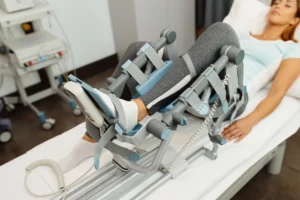
Recovery from robotic total knee replacement follows a structured, predictable timeline. Because robotic surgery causes less soft tissue damage than traditional techniques, many patients find the early recovery phase more comfortable than they expected.
Recovery Timeline
| Phase | Timeframe | What to Expect |
| Immediate | 0-24 hours | Walking with support begins. Pain well-managed. |
| Early recovery | Days 2-7 | Hospital physiotherapy. Swelling reducing. |
| Home recovery | Weeks 2-6 | Daily exercises. Walking without a frame. |
| Active recovery | Weeks 6-12 | Stairs independently. Driving resumes. |
| Functional recovery | 3-6 months | Near-normal activity for most daily tasks. |
| Full recovery | 6-12 months | Complete strength and range of motion achieved. |
Key recovery tips:
- Begin physiotherapy within 24 hours — never delay mobilisation
- Ice the knee regularly in the first 2-3 weeks to control swelling
- Follow your surgeon’s weight-bearing instructions precisely at every stage
Who Is a Suitable Candidate for Robotic Total Knee Replacement Surgery?
Robotic total knee replacement suits most patients needing knee replacement — but certain patients benefit most from the robotic approach.
Ideal candidates:
- Younger, active patients (under 65) who want maximum implant longevity
- Patients with unusual knee anatomy, significant deformity, or previous knee surgery
- Patients prioritising the fastest possible recovery and return to full activity
May need to discuss alternatives:
- Patients with severe osteoporosis or very limited bone stock
- Elderly high-risk patients where shorter anaesthetic time is a priority
A thorough pre-operative assessment — X-rays, CT scan, and medical fitness evaluation — confirms whether robotic surgery is the right choice for you or not.
Cost of Robotic Total Knee Replacement Surgery
Robotic total knee replacement surgery costs more than traditional knee replacement — primarily due to the technology investment of the robotic system and the additional pre-operative CT scanning required.
| Procedure | Approximate Cost in India |
| Traditional Total Knee Replacement | ₹1,80,000 – ₹3,50,000 |
| Robotic Total Knee Replacement | ₹3,00,000 – ₹6,00,000 |
Key cost factors:
- Hospital category and city
- Implant brand — Indian vs premium imported
- Surgeon’s experience and length of hospital stay
Insurance coverage: Most health insurance policies in India cover knee replacement surgery. Always confirm whether your policy covers the robotic technology premium, check for implant sub-limits, and request pre-authorisation before scheduling a surgery.
Why Choose Robotic Total Knee Replacement?
For patients facing knee replacement surgery, the decision to choose the robotic approach comes down to three practical considerations:
1. Most accurate surgery available – Robotic precision delivers implant alignment that manual surgery cannot consistently match — particularly important for younger, active patients.
2. Faster, more comfortable recovery – Less soft tissue damage means less swelling, less post-operative pain, and faster progress through physiotherapy milestones.
3. Longer-lasting results – Correct implant alignment is the strongest predictor of implant longevity. Robotic precision directly translates to a replacement that lasts longer.
Frequently Asked Questions
1. How long is the recovery from robotic knee replacement?
Walking begins within 24 hours of surgery. Most patients achieve full daily independence within 3-6 months and complete recovery within 6-12 months.
2. Is robotic surgery good for knee replacement?
Yes — robotic knee replacement delivers more accurate alignment, less tissue damage, and higher satisfaction than traditional surgery, with a 93-97% success rate.
3. How painful is robotic knee replacement?
Less painful than traditional surgery — smaller, more accurate cuts mean less tissue trauma, and modern pain management keeps post-operative discomfort well controlled.
4. How many stitches are in a robotic knee replacement?
Typically, 15-25 sutures or staples along an 8-12cm incision, depending on the surgeon’s closure technique. Many surgeons now use dissolvable sutures.
5. What is the biggest complaint after knee replacement?
Constant stiffness and slower strength recovery in the first 3-6 months are the most common complaints, both significantly reduced with robotic surgery due to better soft tissue balance and implant precision.
Conclusion
Robotic total knee replacement surgery combines surgeon expertise with computer-guided precision to deliver more accurate, personalised, and longer-lasting outcomes than traditional approaches. For patients with severe knee arthritis, it is the most advanced surgical option available today.
Prime Ortho — Best Orthopedic Hospital in East Delhi — offers robotic total knee replacement using the latest robotic platforms with patient-specific 3D planning for every case.

Dr.Shekhar Srivastav
Robotic Joint Replacement Surgeon | Senior Orthopaedic Surgeon | Knee, Shoulder & Sport Injury Specialist