
Knee pain that stops you from walking, sleeping, or enjoying your daily life is not something you should simply accept. If conservative treatments have stopped working, Mako Robotic Knee Replacement may be the most precise, advanced solution available today.
This complete guide covers everything you need to know — what Mako robotic knee surgery is, how it works step by step, who qualifies, what it costs in India, and the real recovery and results patients experience.
What Is Mako Robotic Knee Replacement?
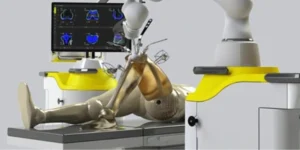
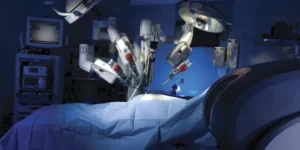
Mako Robotic Knee Replacement is an advanced surgical procedure that uses robotic-assisted technology to help surgeons perform knee replacement with high accuracy. It allows a more personalised approach compared to traditional methods.
Before surgery, a CT scan creates a detailed 3D model of your knee. This helps the surgeon plan the exact implant size, position, and alignment based on your unique anatomy — even before the procedure begins.
During surgery, the robotic arm provides real-time guidance and safety boundaries, ensuring highly accurate placement. This results in less tissue damage, better joint function, and faster recovery.
Types of Mako Robotic Knee Replacement
The Mako system is used for two main types of knee replacement, depending on the extent of your joint damage:
1. Mako Robotic Total Knee Replacement
Total knee replacement is recommended when the entire knee joint — all three compartments — is affected by arthritis or damage. In a Mako Robotic Total Knee Replacement, the entire joint surface is resurfaced and replaced with an artificial implant.
Best for: Advanced osteoarthritis, rheumatoid arthritis, and post-traumatic arthritis affecting the whole knee.
2. Mako Robotic Partial Knee Replacement
If only one compartment of your knee is damaged — most commonly the medial (inner) compartment — a Mako Robotic Partial Knee Replacement may be the right choice. Only the damaged part is replaced, and the healthy bone, cartilage, and ligaments in the rest of the knee are left completely intact.
Best for: Early to moderate osteoarthritis confined to one compartment, unicompartmental arthritis.
How Does the Mako Robot Work? (Step by Step)
Mako Robotic Knee Replacement is designed to improve surgical precision through advanced planning and real-time guidance. The system works in clearly defined steps to ensure accurate and personalised treatment.
Step 1 — Pre-Surgery CT Scan & 3D Planning
A CT scan creates a detailed 3D model of your knee. This allows the surgeon to plan implant size, position, and alignment based on your exact anatomy.
Step 2 — Intraoperative Real-Time Guidance
During surgery, the Mako system tracks your knee in real time. The robotic arm guides the surgeon and prevents movement beyond safe boundaries for precise bone preparation.
Step 3 — Implant Placement & Verification
The implant is placed using real-time feedback from the system. Alignment, fit, and balance are checked to ensure accurate positioning.
Step 4 — Closure & Recovery Begins
The surgery is completed with minimal tissue damage. Patients usually experience less pain and can start recovery and physiotherapy earlier.
Benefits of Mako Robotic Knee Replacement
Mako Robotic Knee Replacement offers advanced precision and better outcomes compared to traditional surgery. It focuses on accuracy, faster recovery, and improved patient comfort.
- Sub-millimetre precision — implant placement accuracy that consistently outperforms manual surgery
- Personalised surgery — every procedure is planned around your unique knee anatomy, not a standard template
- Reduced soft tissue damage — less trauma to muscles and ligaments means less post-operative pain and swelling
- Faster recovery — most Mako patients return to their daily activities sooner than conventional knee replacement patients
- More natural knee feel — improved alignment and balance means the replaced knee moves and feels closer to a natural joint
Who Is a Candidate for Mako Robotic Knee Surgery?
Mako Robotic Knee Replacement is suitable for patients with ongoing knee pain that affects daily life and does not improve with basic treatment.
You may be a good candidate if:
- You have arthritis or significant knee joint damage
- Non-surgical treatments are no longer effective
- Knee pain limits walking, stairs, or even daily activities
The best way to confirm suitability is a consultation with a specialist who can evaluate your condition and imaging.
Mako Robotic Knee Replacement Cost in India
Cost is one of the most common questions patients ask — and it is important to have realistic expectations.
| Procedure | Estimated Cost Range (India) |
| Mako Robotic Total Knee Replacement (one knee) | ₹2,50,000 – ₹5,00,000 |
| Mako Robotic Partial Knee Replacement (one knee) | ₹2,00,000 – ₹4,50,000 |
| Conventional Total Knee Replacement (for comparison) | ₹1,50,000 – ₹3,00,000 |
Factors that affect the final cost:
- Type of procedure — total vs partial knee replacement
- Implant brand and grade selected
- Hospital facility and room category chosen
- Surgeon’s experience and fee
While the mako robotic knee replacement surgery cost may be higher than traditional surgery, it often supports better outcomes and faster recovery.
Does Health Insurance Cover Mako Robotic Knee Replacement?
This is one of the most important financial questions patients ask before surgery. Here is an honest breakdown:
- Government schemes (PMJAY / Ayushman Bharat): Cover standard knee replacement, but robotic-specific costs in Mako Robotic Knee Replacement may not be fully included. Always check with your hospital.
- Private health insurance: Most plans cover knee replacement surgery, but the additional robotic cost of Mako Robotic Knee Replacement may be partially covered or excluded.
- Corporate group insurance: Coverage varies by policy — some include robotic surgery, while others treat it like conventional replacement.
- Mediclaim policies: Usually cover basic surgery, but may have limits, meaning extra robotic costs may need to be paid separately.
What to do: Always request pre-approval and a full cost breakdown before your Mako Robotic Knee Replacement procedure.
Recovery After Mako Robotic Knee Replacement
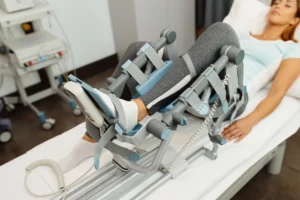
Recovery from Mako Robotic Knee Replacement is typically faster and more comfortable than conventional knee surgery — but it still requires patience, consistency, and commitment to physiotherapy.
| Recovery Phase | Timeframe | What to Expect |
| Hospital Stay | Day 1–3 | Pain managed with medication. Physiotherapy begins within 24 hours. Standing and walking with support on Day 1. |
| Early Recovery | Week 1–2 | Home with walker or crutches. Daily physiotherapy exercises essential. Swelling normal. |
| Progressive Recovery | Week 3–6 | Transition to walking stick. Significant improvement in pain and mobility. Independent basic activities. |
| Functional Recovery | Week 6–12 | Most patients are driving again. Walking longer distances. Stairs manageable. Return to desk work. |
| Full Recovery | 3–6 Months | Return to normal daily life. Light recreational activities. Pain minimal or absent. |
| Long-Term | 6–12 Months | Knee continues to strengthen. Swimming, cycling, and walking fully resumed. |
Recovery tips that make a real difference:
- Do your physiotherapy exercises every single day without exception
- Ice the knee for 20 minutes after each exercise session to manage swelling
- Follow your medication schedule — do not skip pain relief in the early weeks
What to Expect from Your Mako Robotic Knee Replacement — Real Results
Patients consistently report transformative improvements after Mako Robotic Knee Replacement. Here is what the evidence and patient outcomes show:
- Pain relief: The majority of patients report a significant and lasting reduction in knee pain within the first 4–8 weeks
- Improved mobility: Most patients regain the ability to walk, climb stairs, and perform daily activities within 3 months
- Natural knee feel: The precision of Mako alignment means many patients report their replaced knee feels closer to a natural joint than with conventional replacement
- Implant longevity: Accurate placement reduces wear and extends implant life — advanced robotic implants are designed to last 20+ years with appropriate activity levels
Why Choose Mako Robotic Knee Replacement?
Mako Robotic Knee Replacement is becoming a preferred option for patients looking for more accurate and reliable knee surgery outcomes. It uses advanced technology to plan and perform surgery with better precision than traditional methods.
This approach helps reduce tissue damage, improve alignment, and support faster recovery. Because the procedure is customised to your knee, it also improves comfort and long-term joint function.
Key advantages include:
- Personalised treatment based on your anatomy
- Greater surgical precision and control
- Faster and smoother recovery
- Improved long-term joint function
For patients looking for reliable and advanced care, Mako Robotic Knee Replacement offers a modern solution that overcomes many limitations of conventional knee surgery.
Frequently Asked Questions (FAQs)
1. Is Mako Robotic Knee Replacement better than conventional knee replacement?
Yes, for most patients, it offers better precision, less tissue damage, faster recovery, and improved overall outcomes compared to traditional surgery.
2. How long does Mako Robotic Knee Replacement surgery take?
The surgery usually takes around 1.5 to 2.5 hours, depending on whether it is a total or partial knee replacement.
3. What is the success rate of Mako Robotic Knee Replacement?
It has a high success rate, with more than 90–95% of patients experiencing significant pain relief and better mobility after surgery.
4. How long does a Mako robotic knee implant last?
Most modern implants can last 20 years or more, especially when placed accurately using robotic-assisted technology.
5. Is the Mako Robotic Knee Replacement available in Delhi and East Delhi?
Yes, it is available at advanced hospitals like Prime Ortho in East Delhi, offering expert robotic knee replacement care.
6. What is the difference between Mako total and partial knee replacement?
Total replacement replaces the entire joint, while partial replacement treats only the damaged area, preserving healthy bone and ligaments.
Conclusion
Mako Robotic Knee Replacement is one of the most advanced solutions for treating severe knee pain, offering better precision, personalised planning, and faster recovery compared to traditional surgery. Whether it is a total or partial replacement, this technology ensures more accurate results and improved long-term joint function.
If knee pain is affecting your daily life and you are looking for a reliable and advanced treatment option, Mako Robotic Knee Replacement is worth considering. Prime Ortho — Best Orthopedic Hospital in East Delhi provides expert care with advanced robotic technology to help you recover faster and regain mobility with confidence.

Dr.Shekhar Srivastav
Robotic Joint Replacement Surgeon | Senior Orthopaedic Surgeon | Knee, Shoulder & Sport Injury Specialist