Robotic knee replacement is among the most advanced surgeries in modern orthopedics. Patients today are not just looking for pain relief—they want faster recovery, accuracy, and long-term results. That’s where robotic-assisted surgery comes into play.
Understanding the advantages and disadvantages of robotic knee replacement is crucial before making a decision. While this technology offers improved accuracy and outcomes, it also comes with certain limitations that every patient should be aware of.
What is Robotic Knee Replacement?
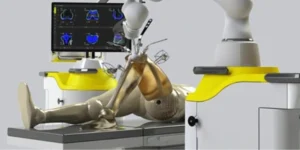
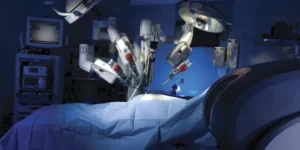
Robotic knee replacement is a modern surgical technique where a computer-guided robotic arm assists the surgeon with exceptional accuracy. The surgeon remains fully in control at all times — the robotic system acts as a precision instrument, not an independent operator.
Before surgery, a CT scan creates a personalised 3D map of the patient’s knee, guiding bone cuts and implant placement with sub-millimetre accuracy that traditional manual techniques cannot consistently achieve.
Advantages of Robotic Knee Replacement
Robotic-assisted knee replacement consistently outperforms traditional surgery across several measurable clinical outcomes. Here are the five most significant benefits of robotic knee replacement that patients should know about.
1. Superior Implant Placement Precision
Robotic knee replacement delivers sub-millimetre accuracy in bone cutting and implant positioning — eliminating the most common cause of long-term implant failure.
Benefit: During surgery, the system gives real-time feedback and alerts the surgeon if anything goes off track, helping place the implant in the exact correct position.
Why It Matters: If the implant is not placed correctly, it can wear out faster and may need another surgery later. Robotic surgery helps place the implant with more accuracy, reducing these risks significantly.
2. Personalised Surgical Planning for Every Patient
Every patient’s knee anatomy is unique. Robotic surgery begins with a CT-based 3D model, allowing the surgeon to plan exact implant size, position, and alignment before entering the operating room.
Benefit: The personalised plan eliminates guesswork and adapts to each patient’s specific bone geometry, deformity, and soft tissue balance.
Why It Matters: Patients with unusual anatomy or previous knee injuries benefit most — conditions where traditional templating is least reliable.
3. Reduced Soft Tissue Damage
Robotic systems guide the surgeon very precisely and prevent instruments from going beyond the planned area. This helps protect healthy tissues like ligaments and cartilage around the knee.
Benefit: Less damage to surrounding tissues means less swelling, less bleeding, and reduced pain after surgery compared to traditional methods.
Why It Matters: Because the surgery is gentler on the body, recovery is faster and more comfortable. Most patients are able to start walking within 24 hours after surgery.
4. Higher Long-Term Implant Survival Rate
Correct implant alignment is the single most important predictor of how long a knee replacement lasts. Robotic accuracy directly extends implant longevity.
Benefit: Clinical data shows robotic knee replacements have a revision rate under 3% within the first decade, lower than the 5-10% seen in some traditional surgery series.
Why It Matters: For younger, active patients, a knee replacement lasting 25 years instead of 15 years represents an enormous quality-of-life difference.
5. Better Soft Tissue Balancing
Soft tissue balance means keeping equal tension in the ligaments on both sides of the knee, which is very important for smooth movement after surgery.
Benefit: Robotic systems give real-time data during surgery, helping the surgeon adjust the ligaments accurately instead of relying only on feel.
Why It Matters: Better balance leads to smoother knee movement, improved flexibility, and less stiffness after surgery, resulting in higher patient satisfaction.
Disadvantages of Robotic Knee Replacement
Robotic knee replacement is not the right choice for every patient. Here are five genuine disadvantages patients must understand before making a decision.
1. Significantly Higher Cost
Estimated Robotic knee replacement costs ₹1,50,000 – ₹5,00,000 more than traditional knee replacement in India due to the robotic system and additional CT scanning.
Limitation: Many insurance policies cover knee replacement, but may not cover the robotic technology premium. Always verify coverage before scheduling.
Why It Matters: For older, less active patients where implant longevity is a lower priority, the additional cost may not be clinically justified.
2. Limited Availability in India
Robotic knee replacement is currently available only at selected advanced orthopedic centres, mostly in major cities.
Limitation: Patients living in smaller or tier-2 cities may need to travel to access this treatment, which can be inconvenient.
Why It Matters: It’s not just about the technology — the surgeon’s experience is equally important. Always check how experienced your surgeon is with robotic procedures before making a decision.
3. Longer Operating Time
Robotic knee surgery may take slightly longer than traditional surgery because of the setup and detailed planning done during the procedure.
Limitation/Risk: A longer surgery means a bit more time under anesthesia, which can slightly increase risk for elderly patients or those with heart or lung conditions.
Why It Matters: If you have existing health issues, it’s important to discuss the surgery time and safety with your doctor beforehand.
4. Not Suitable for All Knee Conditions
Robotic surgery works best for standard knee anatomy. Patients with severe bone loss, previous extensive knee surgery, or very poor bone quality may not be optimal candidates.
Limitation: The robotic system relies on accurate bone registration — requiring sufficient bone stock for registration pins and predictable bone surfaces.
Why It Matters: In complex cases, an experienced surgeon’s adaptability may produce better outcomes than robotic guidance. Individual assessment is always important.
5. Surgeon Learning Curve
Every surgeon using a robotic system goes through a learning curve — particularly in the first 20-50 cases — where procedure times are longer, and benefits are smaller.
Limitation/Risk: A surgeon with vast traditional experience but limited robotic cases may not yet surpass their established conventional technique with the robot.
Why It Matters: Ask specifically how many robotic procedures your surgeon has performed on that platform — not just their total knee replacement volume.
Compare: Pros and Cons of Robotic Knee Replacement Surgery
| Feature | Robotic Knee Replacement | Traditional Knee Replacement |
| Implant precision | Sub-millimetre accuracy | Dependent on surgeon skill |
| Personalisation | Patient-specific 3D planning | Standard templating |
| Recovery speed | Faster — less tissue trauma | Standard timeline |
| Success rate | 93-97% | 90-95% |
| Revision rate | Under 3% (10 years) | 5-10% (10 years) |
| Cost | Higher | Lower |
| Availability | Limited centres | Widely available |
What Does the Robot Actually Do in a Knee Replacement?
This is one of the most common questions patients ask — and the answer surprises most people.
The robot does not perform surgery. It assists the surgeon with three specific tasks:
- Pre-operative 3D planning — creating a digital model from CT scan data and planning implant position
- Intraoperative guidance — showing the surgeon in real time where the bone cut is being made
- Haptic boundary enforcement — The system guides the surgeon and prevents the instruments from going beyond the planned area, helping ensure safe and accurate cuts during surgery.
Everything else is performed entirely by the surgical team. The robot is a precision tool, not an autonomous operator.
Is Robotic Knee Surgery Right for You?
Robotic knee replacement is not a one-size-fits-all solution — it delivers the greatest benefit for specific patient profiles. Consider robotic surgery if you fall into one of these categories:
- Patients under 65 seeking maximum implant longevity and long-term performance
- Active individuals planning to return to sport or physically demanding activities
- Patients with complex knee anatomy, significant deformity, or previous knee surgery
Who Is Not a Candidate for Robotic Knee Replacement?
Not every patient benefits equally from robotic technology — and for some, traditional surgery remains the better clinical choice. Robotic knee replacement may not be suitable if you are:
- An elderly high-risk anaesthetic patient for whom shorter procedure time is a medical priority
- A patient with severe osteoporosis or very limited bone stock, making accurate bone registration unreliable
- A patient with significant budget constraints, where traditional surgery by an experienced surgeon offers equally appropriate outcomes
Is Robotic-Assisted Joint Replacement Better Than Traditional Surgery?
For the right patient and an experienced surgeon, robotic knee replacement can offer slightly better accuracy and outcomes compared to traditional surgery. The success rate is around 93–97% for robotic surgery versus 90–95% for traditional methods.
However, the surgeon’s experience matters more than the technology. A skilled surgeon can deliver excellent results with either approach.
FAQs
1. Why do surgeons prefer robotic surgery?
Robotic surgery provides real-time precision data on soft tissue balance and bone cut accuracy that cannot be reliably obtained by feel alone — reducing technical variability and improving consistency.
2. Which surgery is better — robotic or manual?
For younger active patients, robotic surgery generally delivers better long-term outcomes. For elderly patients with straightforward anatomy and budget constraints, traditional surgery by an experienced surgeon remains equally effective.
3. What is the failure rate of robotic surgery?
Robotic knee replacement has a revision rate under 3% within the first decade, lower than traditional surgery, which reports 5-10% revision rates at 10 years.
4. What is the success rate of robotic knee replacement surgery?
The success rate is 93-97%, with implant survival at 15-20 years reaching 90-95% with proper post-operative care and lifestyle management.
5. How painful is robotic knee surgery?
Robotic surgery causes less post-operative pain than traditional surgery due to reduced soft tissue trauma. Most patients report that the post-surgical discomfort is significantly less than the chronic joint pain they experienced before surgery.
Conclusion
Understanding the Advantages and Disadvantages of Robotic Knee Replacement helps patients make a more informed decision based on their condition and lifestyle. For the right patient — especially younger and active individuals — the benefits of robotic knee replacement often outweigh its limitations. For older patients with simpler cases, traditional surgery by an experienced surgeon can still deliver excellent results.
Prime Ortho — Best Orthopedic Hospital in Delhi NCR offers robotic knee replacement under Dr. Shekhar Srivastav with personalised 3D planning for every patient — helping you make the decision that is right for your anatomy, lifestyle, and goals.

Dr.Shekhar Srivastav
Robotic Joint Replacement Surgeon | Senior Orthopaedic Surgeon | Knee, Shoulder & Sport Injury Specialist