Living with chronic knee pain that limits your daily life, disrupts your sleep, and reduces your independence is exhausting. If conservative treatments have stopped working, robotic knee surgery could be the most advanced and accurate solution available today.
In this guide, we cover everything patients need to know — how robotic knee replacement surgery works, who it is right for, what it costs, recovery timelines, and real success rate data — so you can make a fully informed decision.
What is Robotic Knee Surgery?
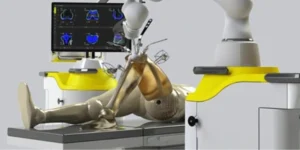
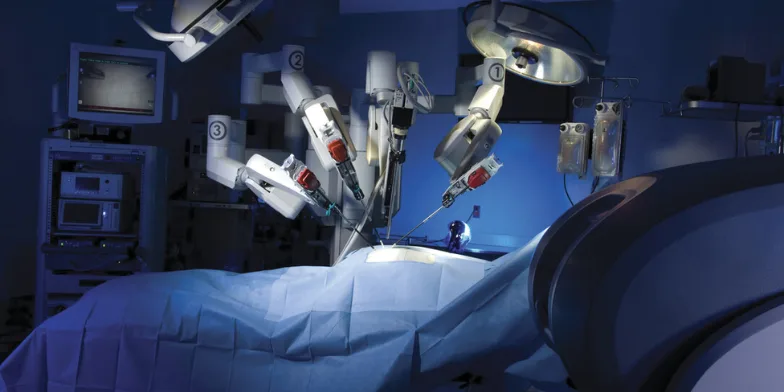
Robotic knee surgery is a modern surgical technique where a computer-guided robotic arm assists the orthopedic surgeon in performing knee replacement with exceptional precision. The surgeon remains in complete control at all times — the robotic system acts as a precision instrument, not an independent operator.
Before and during surgery, the robotic system creates a three-dimensional map of the patient’s unique knee anatomy — guiding precise bone cuts and implant placement with sub-millimeter accuracy that traditional manual techniques simply cannot match.
How Does Robotic Knee Surgery Work?
Understanding the process helps patients feel confident and prepared before their procedure.
Step 1 — Pre-surgical Planning
A CT scan of the patient’s knee is taken before surgery. The robotic system uses this data to create a precise 3D digital model of the patient’s specific knee anatomy — including bone structure, alignment, and joint dimensions.
Step 2 — Personalized Surgical Plan
The surgeon uses the 3D model to plan the exact size, position, and alignment of the implant before the patient enters the operating room. This eliminates guesswork entirely.
Step 3 — Robotic-Assisted Surgery
During the procedure, the robotic arm guides the surgeon’s movements in real time — providing haptic feedback and alerts if the surgical tool moves outside the pre-planned boundaries. This ensures every bone cut is precise and every implant is placed exactly as planned.
Step 4 — Implant Placement and Closure
The knee implant is placed with verified alignment, and the wound is closed. The entire procedure typically takes 60-90 minutes.
Step 5 — Post-Surgery Rehabilitation
Physiotherapy begins within 24 hours of surgery — a structured rehabilitation program that is critical to achieving the best possible long-term outcome.
Types of Robotic Knee Surgery
Robotic technology can be applied across different types of knee replacement procedures:
| Type | Best For | Robotic Advantage |
| Total Robotic Knee Replacement | Severe arthritis affecting the entire knee | Accurate alignment of all three compartments |
| Partial Robotic Knee Replacement | Damage in one knee compartment only | Preserves healthy bone and tissue |
| Robotic Revision Knee Replacement | Failed previous implant | Accurate assessment of complex anatomy |
| Bilateral Robotic Knee Replacement | Both knees require simultaneous replacement | Consistent precision across both joints |
Your orthopedic surgeon will determine which type is most appropriate based on your specific knee condition, age, activity level, and overall health.
Who Is a Candidate for Robotic Knee Surgery?
Robotic knee surgery is suitable for many patients, depending on their condition and overall health.
You may be a good candidate if you:
- Have moderate to severe knee arthritis
- Experience long-term knee pain not improving with treatment
It may not be suitable if you:
- Have severe bone weakness (osteoporosis)
- Have an active infection in the knee
A consultation with an orthopedic specialist is important to decide if robotic knee surgery is right for you.
What Is the Robotic Knee Surgery Success Rate?
The robotic knee surgery success rate consistently outperforms traditional techniques — particularly in implant alignment accuracy and long-term patient satisfaction.
Key success rate data:
- 93-97% overall success rate for robotic-assisted knee replacement
- 90-95% implant survival rate at 15-20 years
- Revision surgery rate under 3% within the first decade
Why robotic surgery achieves higher success rates:
- Implant malalignment — the most common cause of traditional failure — is virtually eliminated
- Soft tissue balance is optimised during surgery using real-time intraoperative data
- Patients report faster functional recovery and significantly less post-operative pain
The robotic knee surgery success rate is particularly strong for younger, active patients demanding long-term implant performance.
Robotic Knee Surgery vs Traditional: Which Is Better?
This is the most common question patients ask when exploring their options.
| Feature | Traditional Knee Surgery | Robotic Knee Surgery |
| Surgical guidance | Manual — surgeon’s skill and experience | Computer-guided robotic arm assistance |
| Implant precision | High | Very high — sub-millimeter accuracy |
| Bone preservation | Standard | Maximum — only damaged bone removed |
| Success rate | 90-95% | 93-97% |
| Recovery speed | Standard | Faster in most cases |
| Post-op pain | Moderate | Generally lower |
| Cost | Lower | Higher by ₹50,000-₹1,00,000 |
| Best for | Standard cases, budget-conscious patients | Active patients, complex anatomy, and younger patients |
Verdict: Traditional knee replacement surgery remains an excellent procedure — robotic surgery offers a measurable precision advantage that directly impacts long-term implant performance and recovery speed.
Benefits of Robotic Knee Surgery
Patients who choose robotic knee replacement consistently report better outcomes, faster recovery, and higher satisfaction. Here is why:
Surgical Precision Benefits:
- Sub-millimeter implant placement accuracy — eliminates the most common cause of long-term failure
- Personalised 3D surgical planning tailored to each patient’s unique knee anatomy
Recovery Benefits:
- Less soft tissue trauma — significantly reduced post-operative swelling and pain
- Faster mobilization — most patients begin walking within 24 hours of surgery
Long-term Benefits:
- Higher implant longevity — precision alignment reduces wear and extends implant life
- Lower revision surgery risk — under 3% within the first decade
Robotic knee surgery is not just about the procedure — it is about delivering the best possible life after surgery.
What to Expect from Your Robotic Knee Replacement
Knowing what to expect at each stage reduces patient anxiety and improves preparation.
Before Surgery:
- Complete orthopedic consultation, knee imaging, and CT scan for 3D robotic surgical planning
- Pre-operative blood tests, cardiac evaluation, and medication review
During Surgery:
- Robotic system activated with your personalised surgical plan — surgeon performs procedure with robotic arm guidance
- Implant placed with verified alignment confirmed in real time by the robotic system
After Surgery:
- Assisted walking begins within 24 hours — physiotherapy starts immediately
- Discharge within 3-5 days with a detailed home exercise and follow-up plan
Recovery After Robotic Knee Surgery
Recovery from robotic knee surgery is faster than traditional knee replacement in most cases — due to reduced soft tissue trauma and more precise surgical technique.
| Recovery Phase | Timeframe | What to Expect |
| Immediate post-op | 0-24 hours | Assisted walking, pain managed with medication |
| Early recovery | 1-2 weeks | Discharge, wound care, basic mobility exercises |
| Active rehabilitation | 3-6 weeks | Structured physiotherapy, stair climbing |
| Functional recovery | 6-12 weeks | Independent walking, driving, and light activities |
| Full recovery | 3-6 months | Near-normal activity levels achieved |
Recovery tips that improve robotic knee surgery outcomes:
- Begin physiotherapy within 24 hours — never delay rehabilitation
- Avoid high-impact activities for a minimum of 6 months post-surgery
Patients who commit fully to rehabilitation consistently achieve the highest end of the robotic knee surgery success rate range.
Cost of Robotic Knee Surgery in India
Robotic knee replacement surgery cost in India is significantly lower than equivalent procedures in the US, UK, or Australia — without compromising on technology, implant quality, or surgical expertise.
| Procedure Type | Approximate Cost in India |
| Traditional Total Knee Replacement | ₹1.5L – ₹3.5L |
| Robotic Total Knee Replacement | ₹2.5L – ₹5L |
| Robotic Partial Knee Replacement | ₹2L – ₹4L |
| Robotic Bilateral Knee Replacement | ₹4.5L – ₹8L |
What influences robotic knee surgery cost:
- Hospital type and city — metro hospitals cost more than tier-2 centers
- Implant brand — premium brands add to the overall cost
- Surgeon’s experience and robotic system generation used
Most health insurance policies cover knee replacement surgery — verify whether robotic-specific technology charges are included in your policy before scheduling.
Does health insurance cover robotic knee surgery?
Most health insurance policies cover knee replacement surgery; however, robotic-specific technology charges may or may not be included depending on your policy. Always verify with your insurer before scheduling.
India’s combination of advanced robotic technology, highly experienced orthopedic surgeons, and cost-competitive pricing makes it one of the most attractive destinations globally for robotic knee surgery.
Advanced Robotic Surgery at Prime Ortho
At Prime Ortho — Best Orthopedic Hospital in Delhi NCR — robotic knee surgery is performed using the latest generation robotic-assisted surgical systems with personalised 3D surgical planning for every patient.
The orthopedic team specialises in both total and partial robotic knee replacement, supported by a dedicated post-operative rehabilitation program designed to maximise your recovery and long-term surgical outcome.
Frequently Asked Questions
1. Is robotic knee surgery better than regular surgery?
Yes — robotic knee surgery delivers a success rate of 93-97% vs 90-95% for traditional surgery, with measurably higher implant precision and lower revision rates.
2. How painful is robotic knee surgery?
Robotic surgery causes less post-operative pain than traditional surgery due to reduced soft tissue trauma. Pain is well-managed with medications and improves significantly within 2-4 weeks.
3. How many stitches are in a robotic knee replacement?
Most robotic knee replacements require 15-25 staples or stitches with an incision of approximately 8-12 cm, similar in size to traditional surgery but with less underlying tissue disruption.
4. Do surgeons prefer robotic knee surgery?
An increasing number of experienced orthopedic surgeons prefer robotic-assisted surgery for its precision, real-time feedback, and ability to personalize the procedure to each patient’s unique anatomy.
5. Who should not have robotic surgery?
Patients with weak bones, infections, or serious health conditions may not be suitable. A doctor’s consultation will help decide if it’s right for you.
Conclusion
Robotic knee surgery is one of the most advanced options for knee replacement today, with a robotic knee surgery success rate of 93–97%, faster recovery, and better long-term outcomes compared to traditional methods. It is a great option for patients seeking precision and improved results.
Choosing the right hospital and surgical team is equally important. Prime Ortho – Best Orthopedic Hospital in Delhi NCR offers advanced robotic technology with expert care to ensure consistently successful outcomes.

Dr.Shekhar Srivastav
Robotic Joint Replacement Surgeon | Senior Orthopaedic Surgeon | Knee, Shoulder & Sport Injury Specialist