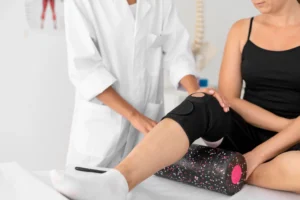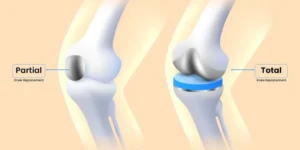
Understanding the Knee Replacement Surgery Success Rate is important before deciding on surgery, as it helps set realistic expectations about recovery and long-term results. Most patients today experience excellent outcomes due to modern advancements in orthopedic techniques.
The Knee Replacement Surgery Success Rate has improved significantly over the years, with modern implants and surgical precision offering better mobility and pain relief. This makes it one of the most trusted solutions for chronic knee pain
When evaluating the Knee Replacement Surgery Success Rate, it’s important to consider factors like age, health condition, and post-surgery care. With the right approach, patients can achieve a smooth recovery and return to an active lifestyle.
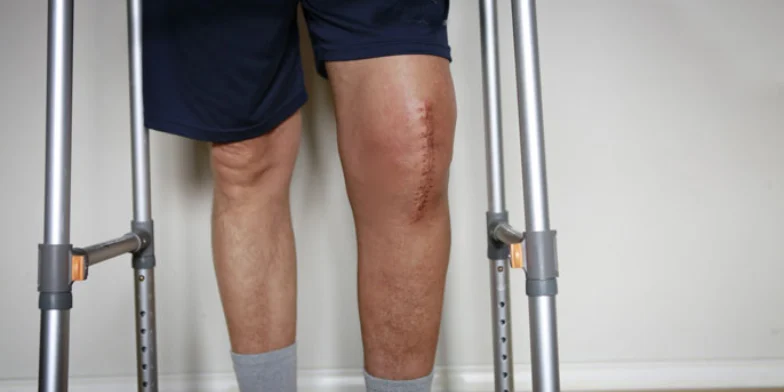
What is Knee Replacement Surgery?
Knee replacement surgery (also known as knee arthroplasty) is a procedure where a damaged or affected knee joint is replaced with an artificial implant.
The knee joint acts as a hinge between the thigh bone and shin bone. When cartilage wears down due to arthritis or injury, it leads to pain, stiffness, and reduced mobility.
Common conditions requiring knee replacement:
- Osteoarthritis (the most common cause)
- Rheumatoid arthritis
- Post-traumatic arthritis
- Severe knee injury
- Degenerative joint disease
Understanding the basics helps you evaluate whether surgery is the right solution for your condition.
What Is the Knee Replacement Surgery Success Rate?
The knee replacement surgery success rate is one of the most frequently asked questions by patients considering this procedure. Here is what the data shows:
- Global success rate: 90-95% — across all age groups and knee conditions
- Implant survival rate: 85-90% — implants last 15-20 years in most patients
- Patient satisfaction rate: 80-90% — majority report significant pain relief and improved mobility
- Revision surgery rate: 5-10% — only a small percentage require a second procedure within 10 years
These figures make knee replacement one of the most successful orthopedic procedures. The knee replacement surgery success rate improves further with an experienced surgeon, proper physiotherapy, and a healthy lifestyle.
Who Requires Knee Replacement Surgery?
Knee replacement is advised when non-surgical treatments stop working. Early diagnosis can improve the knee replacement surgery success rate and long-term outcomes.
You may be a candidate if you have:
- Severe knee pain is limiting daily activities
- Pain even during rest or sleep
- Stiffness affecting movement
- Joint damage confirmed via X-ray or MRI
- No improvement after 6+ months of treatment
Different Types of Knee Replacement Surgeries
Understanding which type of knee replacement applies to your condition directly impacts the success rate and recovery timeline.
| Type | Best For | Success Rate |
| Total Knee Replacement (TKR) | Severe arthritis affecting the entire knee | 90-95% |
| Partial Knee Replacement (PKR) | Damage is limited to one compartment | 85-92% |
| Bilateral Knee Replacement | Both knees replaced simultaneously | 88-93% |
| Revision Knee Replacement | Failed or worn-out previous implant | 75-85% |
| Robotic-Assisted Knee Replacement | Precision placement for better alignment | 93-97% |
Knowing your knee condition and which surgical approach suits it best is the foundation of a successful outcome.
Traditional vs Robotic Knee Replacement Surgery — Which Is More Successful?
This is one of the most debated questions in modern orthopedics. Here is an honest comparison:
Traditional Knee Replacement
- Well-established technique with decades of proven outcomes
- Success rate: 90-95%
- Lower cost — more accessible for budget-conscious patients
- Suitable for most standard knee replacement cases
Robotic-Assisted Knee Replacement
- In Robotic Knee replacement Surgery a robotic arm assists the surgeon with accurate bone cuts and implant placement
- Success rate: 93-97% — marginally higher due to improved alignment accuracy
- Faster recovery in many cases due to less soft tissue damage
- Higher cost — adds approximately ₹50,000 – ₹1,00,000 to total surgery cost
- Available at advanced orthopedic centers like Prime Ortho
Which is better? Both methods deliver excellent results in expert hands. Robotic surgery offers slightly better accuracy, especially for younger and more active patients.
Factors Affecting Knee Replacement Surgery Success Rate
The knee replacement surgery success rate is not fixed — it varies based on several patient-specific and procedure-related factors:
Patient-Related Factors:
- Age — Younger patients tend to have better mobility outcomes; older patients experience more significant pain relief
- Weight and BMI — Higher BMI increases surgical risk and puts greater stress on the implant, reducing longevity
- Overall health — Conditions like diabetes, hypertension, or heart disease affect healing and recovery speed
- Bone density — Strong bone density ensures better implant fixation and long-term stability
- Pre-surgery activity level — Active patients generally achieve better functional outcomes post-surgery
Procedure-Related Factors:
- Surgeon’s experience — Volume of surgeries performed directly correlates with outcomes
- Implant quality — Premium implants from brands offer better longevity
- Surgical technique — Robotic-assisted precision vs. traditional manual technique
Post-Surgery Factors:
- Physiotherapy compliance — The single biggest predictor of functional recovery success
- Lifestyle modifications — Avoiding high-impact activities protects implant longevity
- Follow-up consistency — Regular check-ups catch early complications before they escalate
Risks Before Knee Replacement Surgery
Understanding risks before surgery helps patients make informed decisions and take preventive steps. Common pre-surgical risks include:
- Medical fitness — Uncontrolled diabetes, blood pressure, or cardiac conditions increase anesthesia and surgical risks
- Blood clot risk (DVT) — Patients with a history of deep vein thrombosis require special precautions
- Infection risk — Active infections anywhere in the body must be treated before surgery
- Medication interactions — Blood thinners, anti-inflammatory drugs, and supplements may need to be stopped pre-operatively
- Anesthesia sensitivity — Pre-anesthesia evaluation identifies any reactions or contraindications
Most of these risks are manageable with thorough pre-operative evaluation, which is why the pre-surgical assessment is as crucial as the surgery itself.
What to Expect Before Knee Replacement Surgery
Preparation directly influences the knee replacement surgery success rate. Here is what typically happens in the weeks leading up to surgery:
- Orthopedic consultation and imaging — X-rays, MRI, and physical examination to assess joint damage
- Pre-operative blood tests — CBC, blood sugar, kidney and liver function, coagulation profile
- Cardiac evaluation — ECG and cardiology clearance for patients above 50
- Physiotherapy pre-habilitation — Strengthening the muscles around the knee before surgery improves post-operative recovery speed
- Medication review — Surgeon reviews all current medications and advises which to stop
- Hospital pre-admission — Documentation, insurance pre-authorization, and surgical planning
Patients who arrive well-prepared — medically, physically, and mentally — consistently achieve better surgical outcomes.
Recovery After Knee Replacement Surgery
Recovery is where the knee replacement surgery success rate is truly determined. Even a perfectly performed surgery can underperform if post-operative rehabilitation is neglected.
Recovery Timeline
| Phase | Timeframe | What Happens |
| Immediate post-op | 0-24 hours | Assisted walking begins, pain managed with medication |
| Early recovery | 1-2 weeks | Discharge, wound care, basic mobility exercises |
| Active rehabilitation | 3-6 weeks | Physiotherapy sessions, stair climbing, increased activity |
| Functional recovery | 6-12 weeks | Independent walking, driving, and light daily activities |
| Full recovery | 3-6 months | Return to near-normal activity levels |
| Long-term | 6-12 months | Complete recovery, high-impact activity restrictions advised |
What to Expect After Knee Replacement Surgery
The results of knee replacement surgery are among the most predictable and estimated in all of orthopedic medicine. Here is what most patients experience:
Short-term results (0-3 months):
- Significant pain relief
- Improved mobility and daily activity
- Gradual increase in flexibility
Long-term results (6 months onwards):
- Near-complete pain relief in most patients
- Independent movement and an active lifestyle
- Implant lasts 15–25 years
Most patients describe their post-surgery life as dramatically better compared to the years of chronic pain they endured before the procedure.
Success Rate of Knee Replacement Surgery — Key Takeaways
To summarise what the data and clinical experience consistently show about the knee replacement surgery success rate:
- 90-95% of patients experience significant and lasting pain relief
- 85-90% of implants remain functional after 15-20 years
- Robotic-assisted surgery delivers marginally higher precision outcomes
- Physiotherapy compliance is the strongest predictor of functional success
- Surgeon experience and implant quality are the two biggest controllable success factors
- Revision surgery is required in only 5-10% of cases within the first decade
Frequently Asked Questions
1. What are the disadvantages of a knee replacement?
Risks include infection, blood clots, stiffness, or implant issues. However, complications are rare and manageable with proper care.
2. Can you fully recover from knee replacement surgery?
Yes, most patients recover within 3–6 months. Full strength and flexibility may take up to 12 months with proper physiotherapy.
3. How many knee replacements can you have in a lifetime?
Typically 1–2 per knee. If the implant wears out after 15–20 years, revision surgery may be required, though it is more complex.
4. What is the best age for knee replacement?
Usually between 60–80 years, but it depends on pain, joint damage, and overall health—not just age, and lifestyle factors also matter.
5. What are the five mistakes people make after knee replacement?
Skipping physiotherapy, early overactivity, ignoring symptoms, weight gain, and missing follow-ups can delay recovery and affect results.
Conclusion
Knee replacement surgery is one of the most successful and life-changing orthopedic procedures, with a knee replacement surgery success rate of 90–95%. Most patients experience long-term pain relief, improved mobility, and a better quality of life.
Choosing the right surgeon and hospital is important for the best outcome. Prime Ortho – Best Orthopedic Hospital in Delhi NCR offers advanced knee replacement treatments with expert care, advanced technology, and consistently high success rates, ensuring patients achieve the best possible recovery.

Dr.Shekhar Srivastav
Robotic Joint Replacement Surgeon | Senior Orthopaedic Surgeon | Knee, Shoulder & Sport Injury Specialist