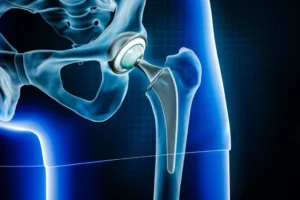

Hip fractures and severe hip joint damage can greatly affect mobility and quality of life, particularly in older adults. Bipolar Hip Replacement is often recommended to relieve pain, restore movement, and help patients regain independence.
Unlike a total hip replacement, a bipolar hip replacement replaces only the damaged or affected femoral head while preserving the natural hip socket. It is commonly performed for elderly patients with hip fractures and selected hip conditions.
In this complete guide, you’ll learn about Bipolar Hip Replacement, including who it’s suitable for, the procedure, benefits, recovery, potential risks, and how it compares with total hip replacement.
What Is Bipolar Hip Replacement?
Bipolar Hip Replacement, also known as bipolar hemiarthroplasty, is a type of partial hip replacement in which the affected femoral head is replaced while preserving the natural hip socket (acetabulum).
The implant features a dual-bearing design with two points of movement—one within the implant and another between the implant and the natural hip socket. This helps reduce friction, improve joint movement, and minimize wear on the acetabular cartilage.
Compared to a standard hemiarthroplasty, Bipolar Hip Replacement offers better mobility and functions as an effective middle ground between unipolar hemiarthroplasty and total hip replacement for selected patients.
Who Is a Candidate for Bipolar Hip Replacement?
Patient selection is the most critical determinant of bipolar hemiarthroplasty success. Appropriate candidates share specific clinical characteristics:
Primary indications:
- Displaced femoral neck fractures (Garden III and IV) — the most common indication globally
- Pathological fractures secondary to bony metastases in the proximal femur
- Avascular necrosis (AVN) of the femoral head — Ficat-Arlet Stages III-IV in elderly, low-demand patients
- Failed internal fixation of femoral neck fractures with non-union or avascular necrosis
Ideal patient profile:
- Age 65 and above — lower physiological reserve makes shorter operative time and less blood loss advantageous
- Low-to-moderate functional demand — patients who are ambulatory but not performing high-impact activities
- Minimal or absent acetabular cartilage disease — if significant acetabular OA exists, bipolar conversion to THA is likely
- Cognitive impairment or reduced life expectancy — where long-term implant survival is a secondary concern
Bipolar Hemiarthroplasty vs Total Hip Replacement — Key Differences
Understanding when to choose each procedure is the central clinical decision in proximal femur pathology:
| Feature | Bipolar Hip Replacement | Total Hip Replacement |
| Acetabulum replaced | No — native socket preserved | Yes — complete joint replacement |
| Operative time | Shorter (45-75 mins) | Longer (90-150 mins) |
| Blood loss | Lower | Higher |
| Surgical complexity | Moderate | Higher |
| Recovery speed | Faster | Slower |
| Dislocation risk | Lower (larger effective head) | Slightly higher with the standard approach |
| Longevity | 10-15 years (varies by acetabular wear) | 15-25 years |
| Best for | Elderly, low-demand, fracture | Younger, active, OA patients |
| Risk of groin pain | Present (acetabular erosion) | Absent (socket replaced) |
| Revision complexity | Convertible to THA | More complex revision |
When Bipolar Hip Arthroplasty Is the Better Option
- Acute displaced femoral neck fracture in elderly — operative window of 24-48 hours makes a shorter, technically simpler procedure preferable
- Avascular necrosis in elderly low-demand patients — when femoral head collapse is advanced but acetabular cartilage remains healthy
- Metastatic disease with limited life expectancy — where palliation of pain and rapid restoration of ambulation is the primary goal
- High anaesthetic risk — shorter operative time reduces cumulative anaesthetic and physiological stress
When Total Hip Arthroplasty Is the Better Choice
- Active patients under 65 — higher functional demands require the superior biomechanics of a complete joint replacement
- Significant acetabular disease on imaging or arthroscopy at the time of surgery
- Rheumatoid arthritis or inflammatory arthropathy affecting the acetabulum
- Patients with strong bone stock and long life expectancy — THA’s superior longevity justifies the greater surgical complexity
Procedure of Bipolar Hip Replacement — Step by Step
Understanding the surgical sequence reduces patient anxiety and supports informed consent:
Pre-operative assessment:
- CT scan for fracture classification and templating
- Cardiac and anaesthetic fitness evaluation — ECG, echo, chest X-ray
- Haematological optimisation — address pre-operative anaemia to reduce transfusion requirement
Surgical approach:
The posterior (Moore), anterolateral (Watson-Jones), or direct anterior approach may be used depending on surgeon preference and patient anatomy. Each has different dislocation risk profiles and rehabilitation implications.
Surgical steps:
- Patient positioning (lateral decubitus for posterior; supine for DAA)
- Femoral neck osteotomy at the appropriate level
- Femoral canal preparation with sequential broaching
- Femoral stem insertion — cemented or cementless depending on bone quality
- Outer bipolar cup assembly and seating over the femoral head
- Trial reduction to confirm leg length, offset, and stability
- Final component: seating and wound closure
Cemented vs cementless fixation:
Cemented stems are preferred in elderly patients with reduced bone density to achieve immediate fixation stability. Cementless press-fit stems are more appropriate for younger patients with good trabecular bone quality where osseointegration is achievable.
Operative duration: 60-90 minutes for an experienced surgical team.
Benefits of Bipolar Hip Replacement
For the appropriate candidate, bipolar hemiarthroplasty offers a clinically meaningful benefit profile:
- Rapid restoration of ambulation — most patients weight-bear within 24-48 hours post-operatively
- Shorter operative time — directly reduces anaesthetic exposure, blood loss, and infection risk
- Bone preservation — acetabular bone stock is preserved, simplifying any future conversion to THA
- Lower dislocation risk than monopolar implants — the outer cup’s relative mobility within the acetabulum provides inherent stability
- Effective pain relief — elimination of the femoral head fracture or AVN-related pain is immediate and consistent
- Convertible implant — bipolar hemiarthroplasty can be revised to THA if acetabular erosion develops, with relatively straightforward acetabular component addition
Risks of Bipolar Hip Replacement
Short-term risks:
- Dislocation — posterior approach carries the highest dislocation risk; managed with positional precautions and muscular repair
- Peri-prosthetic infection — risk stratified by comorbidities; managed with prophylactic antibiotics and meticulous surgical technique
- DVT and pulmonary embolism — mandatory anticoagulation protocol and early mobilisation
- Peri-prosthetic fracture — rare intraoperatively, more common with cementless stems in osteoporotic bone
- Leg length discrepancy — careful pre-operative templating and intraoperative assessment mitigate risk
Long-term risks:
- Acetabular cartilage erosion — the most significant long-term failure mode of bipolar hemiarthroplasty- presents as progressive groin pain and functional decline
- Implant loosening — more common in cemented stems beyond 15 years in active patients
- Heterotopic ossification — ectopic bone formation around the hip, reducing range of motion
- Trunnion corrosion — at the inner bearing junction; a material- and design-specific concern in older implant generations
What to Expect from Bipolar Hip Replacement Surgery
Day of surgery: Spinal or general anaesthesia, 60-90 minute procedure, recovery room monitoring, early mobilisation encouraged within 24 hours.
Hospital stay: 3-5 days for most elderly patients; longer if medical comorbidities require stabilisation.
Post-operative protocol:
- DVT prophylaxis with LMWH or novel oral anticoagulants for 4-6 weeks
- Posterior precautions if posterior approach used — avoid hip flexion >90°, internal rotation, adduction
- Weight-bearing as tolerated from Day 1 with a walking frame
- Physiotherapy for gait training, muscle strengthening, and range of motion
Recovery After Bipolar Hip Replacement
Week 1-2: Acute hospital and early home recovery — pain management, wound care, daily physiotherapy, walker use, hip precautions strictly observed.
Week 3-6: Transition from walker to cane, progressive physiotherapy, muscle strengthening initiated, most patients achieving household independence.
Month 2-3: Functional recovery — independent ambulation for community distances, driving clearance typically at 6-8 weeks for the non-operated side.
Month 3-6: Strength and gait normalisation — physiotherapy continues; return to prior activity level for low-demand elderly patients achieved.
Month 6-12: Clinical and radiological review — X-ray assessment of stem position, acetabular interface, and early signs of cartilage erosion.
Bipolar Hip Replacement Cost in India
Bipolar hemiarthroplasty is generally more affordable than Total Hip Replacement (THA) due to smaller implant size and shorter operative time, while remaining significantly less expensive than in Western markets.
| Cost Component | Estimated Range (India) |
| Surgical procedure (surgeon + anaesthesia) | ₹30,000 – ₹70,000 |
| Bipolar prosthesis (Indian implant) | ₹20,000 – ₹50,000 |
| Bipolar prosthesis (imported implant) | ₹60,000 – ₹1,50,000 |
| Hospital stay (3-5 days) | ₹20,000 – ₹60,000 |
| Pre-operative diagnostics | ₹8,000 – ₹15,000 |
| Post-operative physiotherapy | ₹10,000 – ₹25,000 |
| Total estimated cost | ₹90,000 – ₹3,00,000 |
Insurance coverage is available for eligible patients at empanelled hospitals. Private insurers cover hemiarthroplasty under most standard surgical policies — verify implant sub-limits before scheduling.
Frequently Asked Questions
1. What is the recovery time for a bipolar hip replacement?
Most patients can walk with support within a few days and regain independence in 4–6 weeks. Complete recovery, including improved strength and mobility, usually takes 6–9 months.
2. What is the 90-degree rule with hip replacement?
After surgery, patients are advised to avoid bending the hip beyond 90 degrees, crossing their legs, or twisting the hip inward for 6–12 weeks to reduce the risk of dislocation.
3. Who is a good candidate for bipolar hip replacement?
Bipolar hip replacement is commonly recommended for older adults with displaced hip fractures, avascular necrosis, or selected hip conditions where the natural hip socket remains healthy.
4. How long does bipolar hip replacement surgery last?
The procedure usually takes 60–90 minutes, depending on the patient’s condition and surgical complexity.
5. What can you never do again after hip replacement surgery?
Patients should avoid high-impact activities, deep squatting, and extreme hip movements. Following your surgeon’s advice and rehabilitation plan helps protect the new hip joint.
Conclusion
Bipolar Hip Replacement is a reliable and effective treatment for elderly patients with femoral neck fractures and selected hip conditions. It offers an excellent balance between restoring mobility, relieving pain, and reducing surgical stress, making it a preferred option for many patients.
The success of the procedure depends on proper patient selection, surgical expertise, and a well-planned rehabilitation program. Choosing an experienced orthopedic team can significantly improve recovery and long-term outcomes.
Prime Ortho — Best Orthopedic Hospital in East Delhi offers expert bipolar hemiarthroplasty and total hip replacement with comprehensive pre-operative evaluation, personalized implant selection, and structured rehabilitation to help patients regain mobility and improve their quality of life.

Dr.Shekhar Srivastav
Robotic Joint Replacement Surgeon | Senior Orthopaedic Surgeon | Knee, Shoulder & Sport Injury Specialist